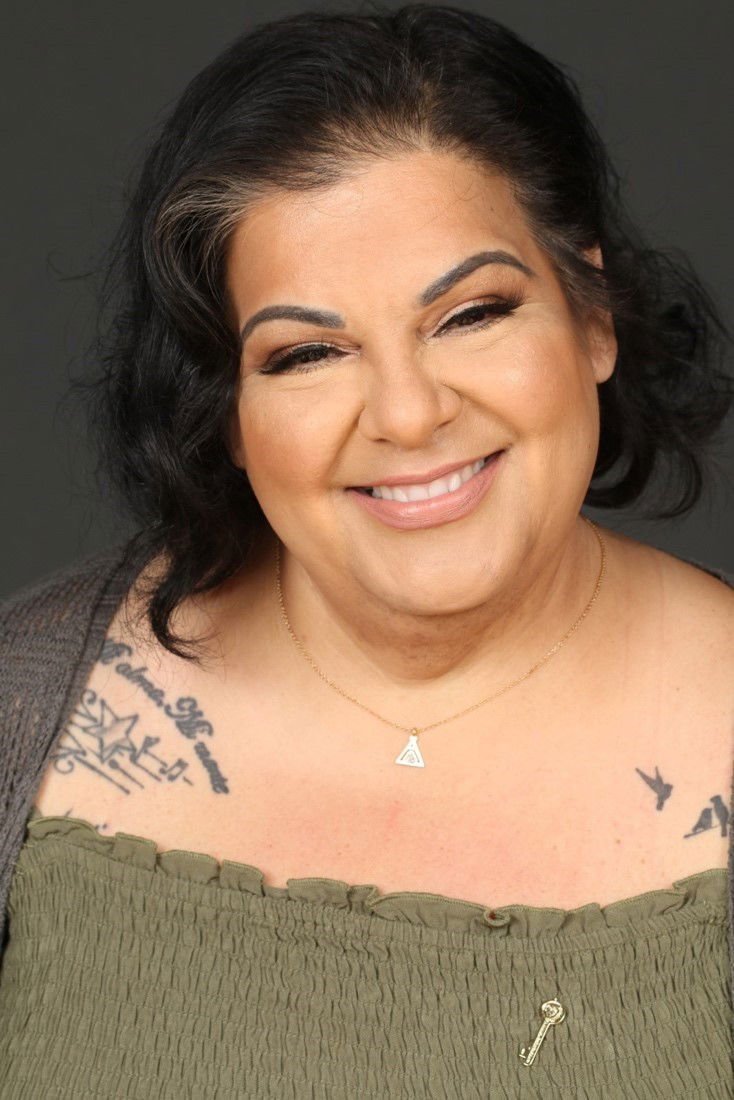
Faith and mental health come together in this powerful Christian testimony from bestselling author and mental health advocate Tabitha Yates, known as The Redeemed Mama. Through her honest journey of faith, healing, and therapy, Tabitha shares how Jesus restored her hope, renewed her mind, and led her to find lasting emotional freedom.

Tabitha Yates
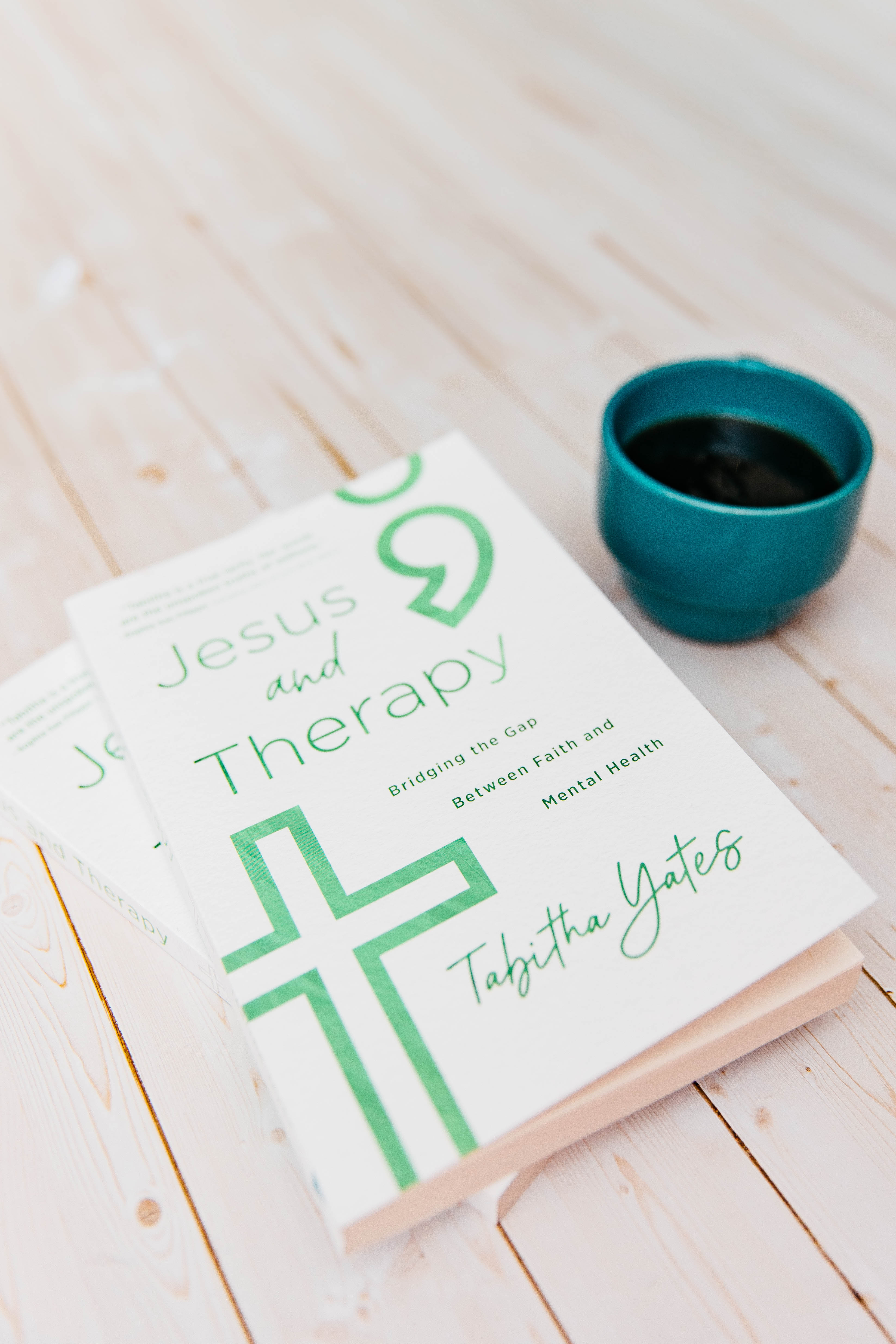
Bestselling author of Jesus and Therapy: Bridging the Gap Between Faith and Mental Health
These are Tabitha's favorite scriptures...
Tabitha, you speak openly about surviving physical and spiritual abuse. How did you find the courage to break the silence and share your story, and how did your own journey with faith and mental health shape its message?
First, unfortunately, there are a lot of systems in place to protect people in power who are abusive. So when you’re talking about church and spiritual abuse and those things that I went through, that was very scary to talk about, and then when you’re talking about family abuse, nobody wants you to bring that into the light, of course.
And so I had to walk so closely with Jesus through this process because I needed to know that I knew that He was in it, that He was commanding me to do this, that He was giving me the words because there was so much fear interjected into the whole process, and what if someone sues you, and what if your ex-pastor comes after you, and what if your father comes after you, and all these things where I was like, “Okay, like those are some legitimate fears,” and to be able to open up, that was one of the most significant parts of my healing. I realized that my silence was not protecting me; it was protecting them, and the people who have wounded and hurt me have been avoiding accountability for decades. Therefore, it was a type of reckoning, like I wasn’t going to cover for them anymore, I wasn’t going to hide, and I wasn’t trying to drag them through the middle or bash, and I made sure to change their real names. I was very respectful, but I am going to tell the truth and talk about what I experienced because it doesn’t matter—it did happen.
And so it was a raw, you know, third, fourth, and fifth healing process for me because I had to get to a place on my own healing journey where it wasn’t triggering to talk about. I wanted to be speaking from a place of healing, not from a place of wounding, because I didn’t want that to be filtered through which I was, you know, saying things to people, and that was really important to me. So, throughout the blessing before the Lord, there were a lot of bathroom floors and sob sessions as I continually surrendered to God, letting Him wash over me and heal me, and letting Him use my story to hopefully go out and heal others.
I think the book is very much a companion guide because I’m never coming at it from the angle that I’m healed, mainly because of how complex my trauma was—my healing is going to be a lifelong process. So the book is very much like, “Let me come alongside of you and show you what I’ve learned in the last 20 years of healing,” so maybe it will give you a little of a roadmap in areas where it’s still really foggy for you, and that was my hope because I didn’t have the church or parental leadership—I didn’t have anyone walking me through healing, just Jesus, myself and my counselor, so I feel like I was going through this jungle with a machete and clearing a path that did not exist. I’m like, “My goodness, if I can go to someone a few miles back and be like, ‘Here, you know, I cleared a little of the way. Like, here are a few ideas.” Here are a few tips. Here are a few things that got me through and made their healing journey a little easier. That was my heart. There was so much to do, and that was to illuminate a path that had been so hard to carve out, and for other survivors to do it with just a little bit more of a roadmap than I had.
My abuse was spiritual, verbal, emotional, and narcissistic. Every safe adult in my life subjected me to every type of abuse imaginable, so I was incredibly confused and believed, “I guess this is just how grown-ups are, and there’s no safe place.” It led me to become severely suicidal because I’m like, “There’s no way out,” and I couldn’t escape the abuse anywhere I went.
How did you start your healing process? Can you share a couple of steps you took? Was there anyone in your family or at your church you could go to, or a friend who came along with you, who could share what you were going through?
I unfortunately needed to break before I rebuilt—part of my journey was that my church did not believe mental illness was a legitimate thing at all, so everything was overspiritualized. I was not allowed to go to counseling. Even in the beginning, from having childhood abuse and parents who divorced dramatically, and all the things I’d gone through, where counseling would have been beneficial, I was not allowed to do that. Then it got to the point that it literally led to me overdosing and attempting suicide before I could see a counselor, so it took getting that bad because again, that was the only escape from the abuse and the hell I was in that I could see, and that was the only way out. After that act, I got locked down in a psych ward on suicide watch by the time I was 16 years old.
I was able to start seeing a Christian psychologist, and it took a lot of healing and years to unravel myself from toxic systems and relationships. It also took me growing older and finally being able to make choices for myself—saying, “Okay, I’m not going to do this anymore. I’m not going to listen to this person anymore. I’m not going to go to this church anymore.”It took a complete shattering of my faith, because for so long my faith had been placed more in people than in God. I had lived in such a spiritually abusive environment where the message was always, “We speak for God; you don’t hear from Him yourself.” Everything spoken to me in that system was damaging and wounding. I had to completely separate people from God and realize that everything I had been told about Him was not true and not biblical. I had to burn it all down to the ground and start over—rebuild my faith and find the truth for myself. There were two women in my church who would still say hurtful things, though not intentionally—they meant well, but they didn’t understand depression or suicidality. Still, a few people tried to show up for me and love me during that period. But they weren’t the ones who should have been protecting me, sheltering me, or helping me at that point.
It took a long time to unravel everything I thought I knew about Jesus—what He felt like, what He felt about me—and to rebuild my understanding of His love. I wrestled with believing that He could still love me after all I’d been through. I wondered if I was some disgrace to Christianity because I was depressed and traumatized. I remember pastors and elders telling me things like, “God’s done with you. You’re beyond saving. You’re not even worth saving.” They said God had washed His hands of me—and that permitted them to do the same. I truly believed I was worthless, beyond saving, and that even if God could save me, He didn’t want to. The level of damage that was done to my faith, my psyche, and my sense of self was enormous. It’s taken a lifetime to undo all of that and to rebuild a foundation that actually comes from the truth of Scripture.
My earthly father’s abuse deeply distorted my view of God. On top of that, many of the church leaders I grew up around also abused me, and I ended up projecting all of that brokenness onto Jesus. It took time—and a lot of healing—to finally develop a healthy, personal relationship with Him that wasn’t shaped by my past pain.I reached a point where I had to step away from those people and toxic environments. Everything they poured into me was rooted in lies, not truth. Setting healthy boundaries became necessary for my healing. And I’ve learned that boundaries are not unkind—they’re actually a loving and wise way to protect the heart God gave you.
Many Christians struggle with the idea of seeking therapy and think that it shows a lack of faith. In your book, Jesus and Therapy, you share six false beliefs to help Christians know and understand that faith and therapy work together. Please share about these beliefs.
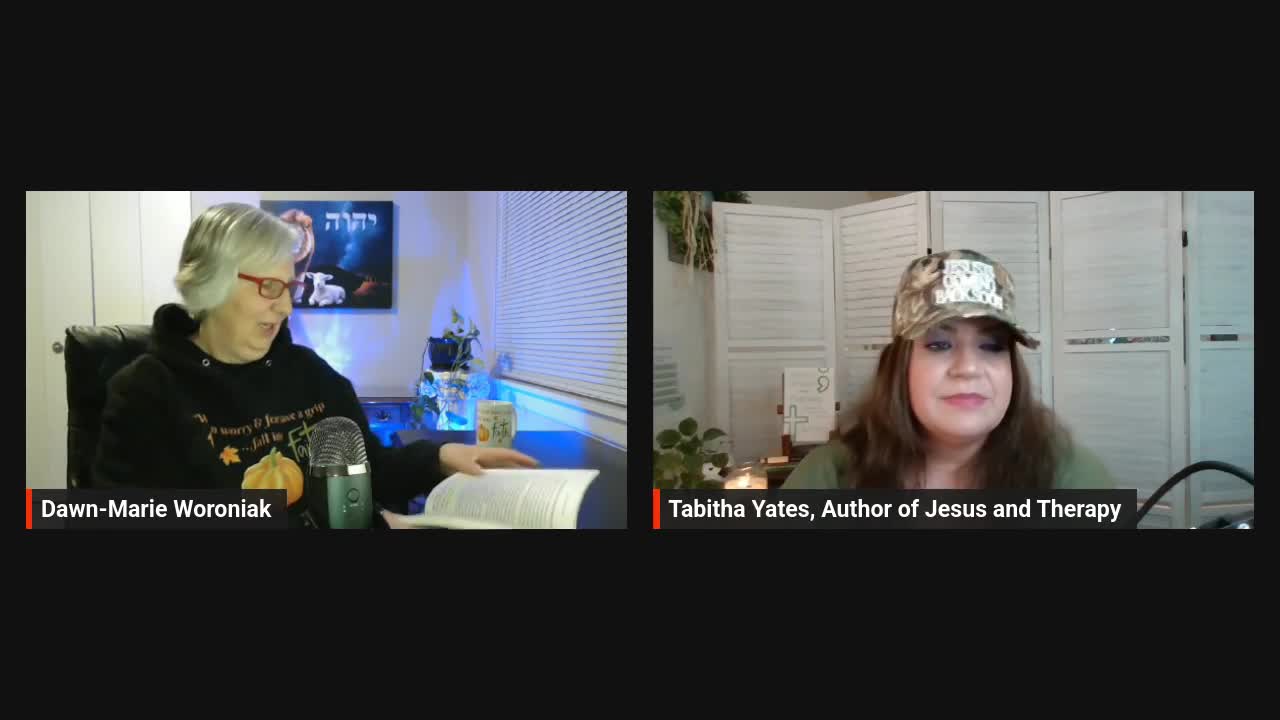
What encouragement would you give to someone watching who loves Jesus but is quietly battling anxiety, depression, or burnout—and doesn’t know where to start?
I think there’s no reason for churches not to be trauma-informed, not to have a care team, and not to have people who understand mental health. I think this even extends to awareness training for people with special needs, to make sure we don’t further wound them. Because again, there’s another level of harm when we wound people in God’s name.
We need to be the safest place. We need to be a place where people can go to heal. And we need to stop being uncomfortable or put off by pain. We also need to stop rushing people through the healing process. So much of what happens is spiritual bypassing—just slapping a verse on someone’s pain and pushing them past actually sitting with what they’ve been through. There is a difference between ruminating for years and actually walking through your trauma. Real healing requires sitting with it. It requires feeling it. And we can’t heal what we won’t name.
As Christians, we need to become okay with discomfort. We need to be willing to hold space for people—their journeys, their grief, their pain—without feeling like we have the right to tell them how to grieve or how to heal. Of course, we can always point them to the arms of a loving Savior who is walking with them. But we need to be careful and guard our hearts so we don’t inflict more damage on someone who is already at their weakest and most vulnerable. I don’t think there’s any excuse anymore for pastors not to be trauma-informed or to avoid training. There’s so much excellent training available.
When we come to the end of ourselves, God is just beginning. Healing involves both Jesus and therapy. Some healing only Jesus can do. But some healing requires the tools available to us—counseling, support, boundaries, and sometimes medication. God doesn’t require you to suffer alone. He doesn’t call it “more spiritual” to stay silent or avoid help. He wants you to step into the light and seek resources. If Christians have made you feel like you have to silently carry your anxiety or depression as your cross to bear, you don’t. You’re allowed to heal. You’re allowed to address the real trauma in your life. It doesn’t have to be that heavy forever. I didn’t want to carry it for the rest of my life—and for my children’s sake, I wouldn’t. So I chased healing. And now it has become my life’s mission.
Tabitha's Site, Where to Purchase Jesus & Therapy, & Social Media Platforms

Tabitha's book can be purchased on Amazon.




Tabitha shared her testimony on...
Truth, Talk & Testimonies
Please consider subscribing, liking, and sharing. Thank you!
Tabitha's testimony is also on...
VictoryEmbraced: Truth, Talk & Testimonies