01May

Discover how Carrie transforms overwhelmed lives through faith-based organizing and decluttering—available virtually or in person across Texas and beyond. From losing her first baby and navigating estrangement from her grown child to reclaiming her identity as a child of God who trusts Him no matter what, Carrie reveals the practical steps that took her from shame to unshakable faith.

Professional Organizer, Life Coach, and Small Business Coach


Carrie shared her testimony on Truth, Talk & Testimonies

Please consider subscribing, liking, and sharing to help spread hope, encouragement, and the gospel. Thank you!


These are Carrie's favorite scriptures


Carrie's testimony is also on VictoryEmbraced: Truth, Talk & Testimonies Podcast Platforms


Carrie's Information & Social Media Platforms


24Mar

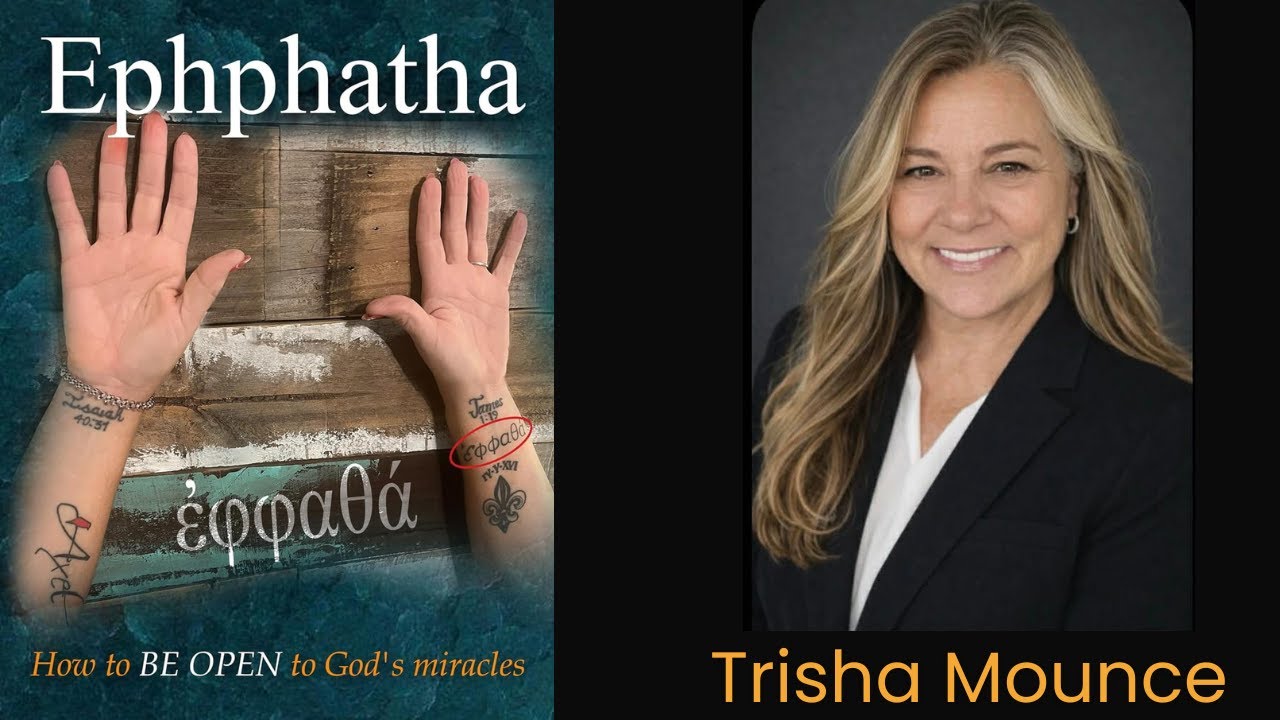
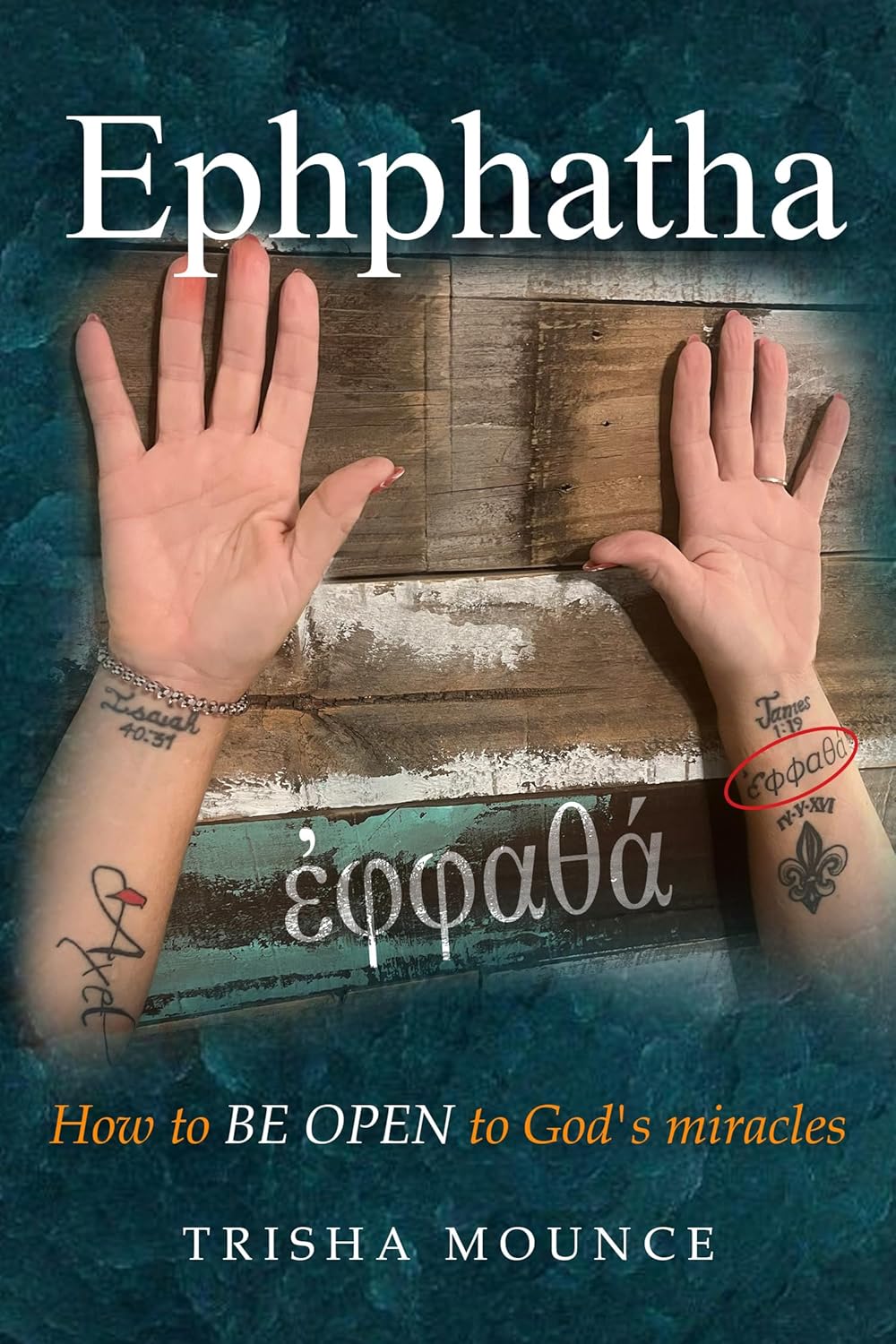
Trisha Mounce, author of Ephphatha: How to BE OPEN to God’s Miracles, co-founder of Warrior Connections and Battle Buddies, and host of Beyond FM Radio, courageously shares her journey through a life-altering car accident, the painful challenges that followed, and the unwavering faith that carried her every step of the way. Her powerful testimony stands as a compelling reminder of God’s love, healing, and sustaining grace. It is Trisha’s heartfelt desire that all people learn to stay open to God’s miracles — because they are happening around us every single day. Through her story and Ephphatha, she encourages believers to surrender fully to God’s will, open their hearts to His presence, and embrace the divine transformation and true victory available in Christ.

Trisha Mounce


Trisha shared her testimony on Truth, Talk & Testimonies

Please consider subscribing, liking, and sharing to help spread hope, encouragement, and the gospel. Thank you! 


These are Trisha's favorite scriptures...


Trisha's testimony is also on VictoryEmbraced:  

Truth, Talk & Testimonies Podcast Platforms


Trisha's Information & Social Media Platforms

(Click on the photos)

Trisha's Book

Warrior Connections YouTube Channel  & Facebook Page

Warrior Connections is on Beyond FM Radio every 

Thursday at 6PM Central Time

Battle Buddies

Get in the Word Ministries


07Jan

For years, Destiny lived under many identities shaped by pain, tragedy, and labels placed on her by others. But everything changed in a moment that should have been the end. Rushed to the hospital and declared clinically dead, she was known only as November Female Unknown. The world didn’t know her name—but God did. While her body lay in a coma, Destiny encountered Jesus Christ Himself. In His presence, she discovered the truth of who she really is and experienced a love so profound it forever altered the course of her life. What Jesus revealed to her reshaped her identity, deepened her pursuit of Him, and redefined what truly matters. This testimony will take you beyond the pages of November Unknown and into the miraculous—where death met Life, the unknown was fully known by God, and a powerful testimony was born.

Destiny Nicole

Author and Co-Founder of Warrior Connections 

and Battle Buddies


These are Destiny's favorite scriptures...

In your book, November Unknown, you talked about how you had many identities shaped by pain and labels others placed on you. Can you share some identities that you used to have?

When I woke up from my coma, I woke up with complete amnesia. Jesus literally walked me through each stage of my life where I went through childhood abuse, and that became my identity. Then I was in an abusive marriage, and I struggled to leave it, and I went through different identities because of the abuse. The next would’ve been paganism, where I was seeking after witchcraft and doing magic, and living that life. I thought that was what I needed to do to be a strong woman, as I had only known abuse at that point. In Paganism, they glorify the goddess and women, and I wanted to be a powerful woman. So I thought that’s where I would get it from. So I sank myself into that identity. And then I started working for a company that I later bought, having worked my way up through it. So I held many identities, and I just wanted to feel important–I wanted to be somebody that my children could look up to. I thought that becoming a strong woman would give me the answer, even though no one ever gave me an opportunity. My favorite identity was being a mom. The best identity I still have. I’ve adopted many children, and I love children. I did that because I knew this world is so mean, and what it was like to be a child. Unprotected, the world just engulfed me, and I wanted to be a different light for children. So that’s what I think grew my refined, my love for children was just because of what I lived through.

Your story in November Unknown is truly miraculous. Could you tell us about when the hospital rushed you there, and they said you were clinically dead with only a 4% chance of survival? So what, what happened, and what did you experience in that coma?

Yes. Because I lack six years of memories, I share things I’ve been told. So, there are a lot of memories I haven’t regained. The last thing I remember is living in Canada and returning to my ex-husband, whom I had been with before. I, okay. Went back to him again. I don’t remember moving to the state I’m in now.

I ended up in another relationship with yet a different abuser. So he had poisoned me. That’s how I actually ended up in my coma because of the poisoning. The EMS found me face down, unresponsive to pain, and already turning blue. They brought me in a sheet and were taking me out of my house.

And the EMS worker saw my stomach filled with air, and they started compressions, leaving so quickly that they didn’t even grab my identification. When I arrived at the hospital, they registered me as a Jane Doe because they didn’t know my identity. Now, they use a month, gender, and unknowns, which is how I became November Female Unknown. That’s where the book’s title comes from.

They use a month, your gender, and then unknowns. Oh, I didn’t know that. People knew me as November Female Unknown. So that’s how I — that’s where the title of the book came from. And once I got to that. Once the ambulance got to the hospital again. I died again at the hospital. So you died twice? Twice. I died on the 13th, but it was like 11 p.m.

It was really late. And then by the time I got to the hospital, it was the next day. So I died on November 13th and then November 14th, and that’s when I slipped into a coma. That’s where the book name came from. 

Can you share your experience with Jesus, as not everyone gets to experience what you did?

Absolutely. One of everyone’s favorite questions is, Could you hear the doctors and people around you talking when I went into my coma? I couldn’t hear any of that. I am afraid of water here on Earth, especially water that I can’t see the bottom of — it terrifies me. But I was white water rafting down a raging river, and I was in this boat, and there was a rope that went around the sides of the boat. I grabbed onto the rope, and I turned just slightly to my right. And Jesus was standing in the boat with me, unmoved. The sound of the water was so loud, and everything was so crisp and bright. And I said to Him, “I’m scared,” not because I was feeling fear, but because I knew that’s what I was supposed to say. And He turned to me, and not only in seeing Him did I know who He was, but in the roar of His voice, and He spoke, “Move when I say move, and stay only when I say to stay.” He paused on the word only, and I still don’t know why yet, but that’s what I’ve been doing ever since. I’ve learned to love the pause. And the Bible verse that says to pause and be slow to speak drew me in because I have to pause. We react rapidly as a society due to our fast-moving world and split-second choices. But if you just pause more and seek what He wants for you before you take even the smallest step, then the big steps are easier to pause at.

I have sought His picture ever since, and have yet to find it. I have people who send me pictures of Him regularly. There’s one picture that is very close to His presence that I’ve been able to find, and I can’t say He has a nose like this person or a feature like that person. He’s every emotion you’ve ever felt at one time without being overwhelmed. Every time I try to describe His voice, it just gets stuck inside me. He has a voice of agape love. Strict, firm, gentle, protective–for the first time in my life, I felt love because I had lived in so much abuse and I was seeking so many identities, trying to make myself feel important, and none of that mattered.

When I stood in His presence, I was just His. And I was enough, and He loved me. I always wished to be loved like that in that moment, and I always think that if everyone could have a second of that experience, their pursuit of Jesus would be very different today. 

So it was during your time with Jesus that you learned who you truly are in Him? 

Well, I was told that I was a Christian before my coma, so I had left paganism and moved to Florida, and I was working with the youth at church. I don’t remember the defining moment that made me a follower of Jesus instead of a pagan–I have no memory of that, and I rarely ask Him for memories back because He knows more than I do. And if He took them away, there’s probably a reason. I wish I knew what drew me back to Him, but I’m glad I was with Him, and was in that boat with Him. When I woke up, Satan immediately preyed on my vulnerability, whispering doubts about Jesus’ acceptance of me. So I went through a tough time, and I went right back into the abusive situation. The hospital had sent me home with the man who put me in a coma, and I went right back into the abuse the day I came home.

How is God using you today? 

In my book, I discuss my daughter and armoring up. In the morning, we put on our armor, and there’s a little blip in the book that didn’t really make sense at the time I was writing it, but the Holy Spirit really wrote my book, and later, from my book, I developed because I’m so nervous to speak. I actually wrote the book so I wouldn’t have to speak. Because I’m such a shy person, I wanted to give my story to other people to share. I was asked to speak at a bunch of events to share my story, I would get very nervous, so I would write out everything to say and get up there, and then forget to read everything that I wrote, and I would stumble over myself.

I was speaking at a revival, and there were youth kids there, and I turned and started talking to the kids, and it felt so natural to me because I love children. So the armoring up developed into Battle Buddies, where my best friend, Trisha, and I Get in The Word Ministries and we do team verse and team games, which are object lessons, for children and family’s and as they come in, they choose pink or green, and they are team verse and team games, and everyone gets to have fun—it’s like the old VBS-style games, and it’s an object lesson of being labeled with an identity that sometimes they didn’t get to pick for themselves or that sometimes they come in and they all wanted to be team green or somebody wants to be a different color, and who you surround yourself with, sometimes you give up pieces of your identity. So, it’s important to stay around people who are leading you in the right direction. Trisha shares her testimony about her car accident. And I share about the identities that I have in my testimony.

Some who are reading your story may be facing their own struggles—identity battles, despair, or even depression. What message of hope and encouragement would you want them to take away from your testimony?

To seek Jesus and know that you are enough. You won’t find true healing or identity anywhere else, so let me save you the time of trying all the paths this world offers or the schemes the enemy will send your way. Just pause… and sit at the feet of Jesus, because that’s where the answers are. 

My pursuit of Jesus looked different. It didn’t matter that I had been a witch or that I was abused—none of it mattered. Getting to Him mattered most. And when you put Jesus in the position where nothing else matters, the little agitations that once consumed you lose their power. God brought me back for a reason, and as He walked me through each of those identities, He kept saying, “I was there.”

I lived through domestic violence. Some women stay because they believe they can’t make it on their own. It’s incredibly hard—especially when you finally reach out for help, but the abuser is only held for 72 hours and then comes right back home. That doesn’t give a woman enough time to escape… but leave anyway. That is my biggest advice: leave anyway. You are far more valuable than sacrificing your life and identity to live for somebody else. You matter. Your safety matters. Your life matters.


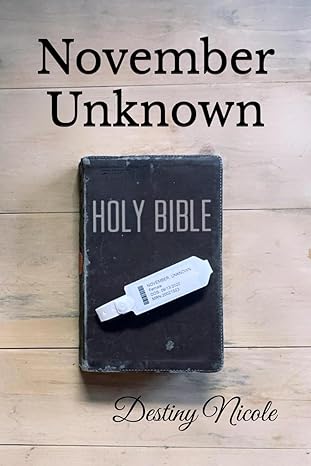
Destiny's book, November Unknown. Get your copy today by clicking on the book cover.


Ministries that Destiny leads or partners with.


Battle Buddies


Get in The Word Ministries


Warrior Connections YouTube Channel


Warrior Connections is on Beyond FM Radio every 

Thursday at 6 pm CT.


Destiny shared her testimony on...

Truth, Talk & Testimonies


Destiny's testimony is also on...

VictoryEmbraced: Truth, Talk & Testimonies


VictoryEmbraced: Truth, Talk & Testimonies every other Tuesday at 11 am CT on Beyond FM Radio. 


06Nov

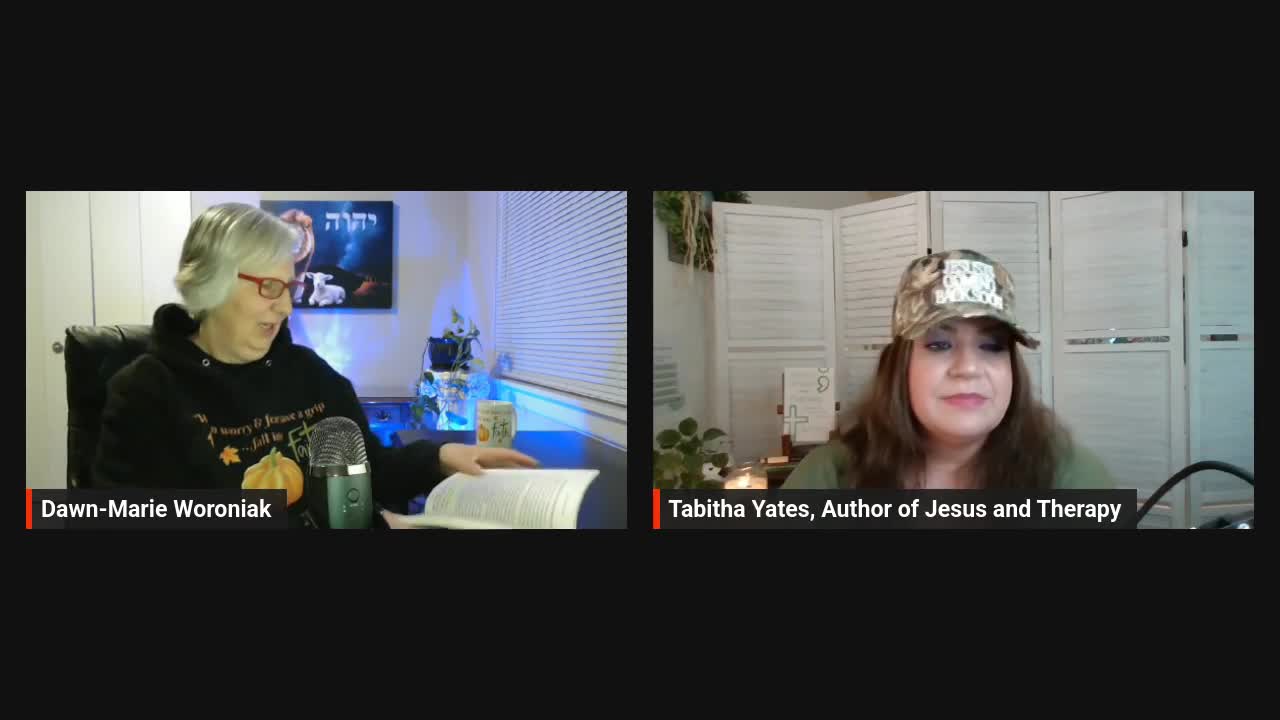
Faith and mental health come together in this powerful Christian testimony from bestselling author and mental health advocate Tabitha Yates, known as The Redeemed Mama. Through her honest journey of faith, healing, and therapy, Tabitha shares how Jesus restored her hope, renewed her mind, and led her to find lasting emotional freedom.

Tabitha Yates

Bestselling author of Jesus and Therapy: Bridging the Gap Between Faith and Mental Health 


These are Tabitha's favorite scriptures...

Tabitha, you speak openly about surviving physical and spiritual abuse. How did you find the courage to break the silence and share your story, and how did your own journey with faith and mental health shape its message?

First, unfortunately, there are a lot of systems in place to protect people in power who are abusive. So when you’re talking about church and spiritual abuse and those things that I went through, that was very scary to talk about, and then when you’re talking about family abuse, nobody wants you to bring that into the light, of course. 

And so I had to walk so closely with Jesus through this process because I needed to know that I knew that He was in it, that He was commanding me to do this, that He was giving me the words because there was so much fear interjected into the whole process, and what if someone sues you, and what if your ex-pastor comes after you, and what if your father comes after you, and all these things where I was like, “Okay, like those are some legitimate fears,” and to be able to open up, that was one of the most significant parts of my healing. I realized that my silence was not protecting me; it was protecting them, and the people who have wounded and hurt me have been avoiding accountability for decades. Therefore, it was a type of reckoning, like I wasn’t going to cover for them anymore, I wasn’t going to hide, and I wasn’t trying to drag them through the middle or bash, and I made sure to change their real names. I was very respectful, but I am going to tell the truth and talk about what I experienced because it doesn’t matter—it did happen. 

And so it was a raw, you know, third, fourth, and fifth healing process for me because I had to get to a place on my own healing journey where it wasn’t triggering to talk about. I wanted to be speaking from a place of healing, not from a place of wounding, because I didn’t want that to be filtered through which I was, you know, saying things to people, and that was really important to me. So, throughout the blessing before the Lord, there were a lot of bathroom floors and sob sessions as I continually surrendered to God, letting Him wash over me and heal me, and letting Him use my story to hopefully go out and heal others. 

I think the book is very much a companion guide because I’m never coming at it from the angle that I’m healed, mainly because of how complex my trauma was—my healing is going to be a lifelong process. So the book is very much like, “Let me come alongside of you and show you what I’ve learned in the last 20 years of healing,” so maybe it will give you a little of a roadmap in areas where it’s still really foggy for you, and that was my hope because I didn’t have the church or parental leadership—I didn’t have anyone walking me through healing, just Jesus, myself and my counselor, so I feel like I was going through this jungle with a machete and clearing a path that did not exist. I’m like, “My goodness, if I can go to someone a few miles back and be like, ‘Here, you know, I cleared a little of the way. Like, here are a few ideas.” Here are a few tips. Here are a few things that got me through and made their healing journey a little easier. That was my heart. There was so much to do, and that was to illuminate a path that had been so hard to carve out, and for other survivors to do it with just a little bit more of a roadmap than I had.

My abuse was spiritual, verbal, emotional, and narcissistic. Every safe adult in my life subjected me to every type of abuse imaginable, so I was incredibly confused and believed, “I guess this is just how grown-ups are, and there’s no safe place.” It led me to become severely suicidal because I’m like, “There’s no way out,” and I couldn’t escape the abuse anywhere I went. 

How did you start your healing process? Can you share a couple of steps you took? Was there anyone in your family or at your church you could go to, or a friend who came along with you, who could share what you were going through?

I unfortunately needed to break before I rebuilt—part of my journey was that my church did not believe mental illness was a legitimate thing at all, so everything was overspiritualized. I was not allowed to go to counseling. Even in the beginning, from having childhood abuse and parents who divorced dramatically, and all the things I’d gone through, where counseling would have been beneficial, I was not allowed to do that. Then it got to the point that it literally led to me overdosing and attempting suicide before I could see a counselor, so it took getting that bad because again, that was the only escape from the abuse and the hell I was in that I could see, and that was the only way out. After that act, I got locked down in a psych ward on suicide watch by the time I was 16 years old.

I was able to start seeing a Christian psychologist, and it took a lot of healing and years to unravel myself from toxic systems and relationships. It also took me growing older and finally being able to make choices for myself—saying, “Okay, I’m not going to do this anymore. I’m not going to listen to this person anymore. I’m not going to go to this church anymore.”It took a complete shattering of my faith, because for so long my faith had been placed more in people than in God. I had lived in such a spiritually abusive environment where the message was always, “We speak for God; you don’t hear from Him yourself.” Everything spoken to me in that system was damaging and wounding. I had to completely separate people from God and realize that everything I had been told about Him was not true and not biblical. I had to burn it all down to the ground and start over—rebuild my faith and find the truth for myself. There were two women in my church who would still say hurtful things, though not intentionally—they meant well, but they didn’t understand depression or suicidality. Still, a few people tried to show up for me and love me during that period. But they weren’t the ones who should have been protecting me, sheltering me, or helping me at that point. 

It took a long time to unravel everything I thought I knew about Jesus—what He felt like, what He felt about me—and to rebuild my understanding of His love. I wrestled with believing that He could still love me after all I’d been through. I wondered if I was some disgrace to Christianity because I was depressed and traumatized. I remember pastors and elders telling me things like, “God’s done with you. You’re beyond saving. You’re not even worth saving.” They said God had washed His hands of me—and that permitted them to do the same. I truly believed I was worthless, beyond saving, and that even if God could save me, He didn’t want to. The level of damage that was done to my faith, my psyche, and my sense of self was enormous. It’s taken a lifetime to undo all of that and to rebuild a foundation that actually comes from the truth of Scripture.

My earthly father’s abuse deeply distorted my view of God. On top of that, many of the church leaders I grew up around also abused me, and I ended up projecting all of that brokenness onto Jesus. It took time—and a lot of healing—to finally develop a healthy, personal relationship with Him that wasn’t shaped by my past pain.I reached a point where I had to step away from those people and toxic environments. Everything they poured into me was rooted in lies, not truth. Setting healthy boundaries became necessary for my healing. And I’ve learned that boundaries are not unkind—they’re actually a loving and wise way to protect the heart God gave you.

Many Christians struggle with the idea of seeking therapy and think that it shows a lack of faith. In your book, Jesus and Therapy, you share six false beliefs to help Christians know and understand that faith and therapy work together. Please share about these beliefs.

What encouragement would you give to someone watching who loves Jesus but is quietly battling anxiety, depression, or burnout—and doesn’t know where to start? 

I think there’s no reason for churches not to be trauma-informed, not to have a care team, and not to have people who understand mental health. I think this even extends to awareness training for people with special needs, to make sure we don’t further wound them. Because again, there’s another level of harm when we wound people in God’s name. 

We need to be the safest place. We need to be a place where people can go to heal. And we need to stop being uncomfortable or put off by pain. We also need to stop rushing people through the healing process. So much of what happens is spiritual bypassing—just slapping a verse on someone’s pain and pushing them past actually sitting with what they’ve been through. There is a difference between ruminating for years and actually walking through your trauma. Real healing requires sitting with it. It requires feeling it. And we can’t heal what we won’t name. 

As Christians, we need to become okay with discomfort. We need to be willing to hold space for people—their journeys, their grief, their pain—without feeling like we have the right to tell them how to grieve or how to heal. Of course, we can always point them to the arms of a loving Savior who is walking with them. But we need to be careful and guard our hearts so we don’t inflict more damage on someone who is already at their weakest and most vulnerable. I don’t think there’s any excuse anymore for pastors not to be trauma-informed or to avoid training. There’s so much excellent training available.

When we come to the end of ourselves, God is just beginning. Healing involves both Jesus and therapy. Some healing only Jesus can do. But some healing requires the tools available to us—counseling, support, boundaries, and sometimes medication. God doesn’t require you to suffer alone. He doesn’t call it “more spiritual” to stay silent or avoid help. He wants you to step into the light and seek resources. If Christians have made you feel like you have to silently carry your anxiety or depression as your cross to bear, you don’t. You’re allowed to heal. You’re allowed to address the real trauma in your life. It doesn’t have to be that heavy forever. I didn’t want to carry it for the rest of my life—and for my children’s sake, I wouldn’t. So I chased healing. And now it has become my life’s mission.


Tabitha's Site, Where to Purchase Jesus & Therapy, & Social Media Platforms


Tabitha's book can be purchased on Amazon.


Tabitha shared her testimony on...

Truth, Talk & Testimonies

Please consider subscribing, liking, and sharing. Thank you! 


Tabitha's testimony is also on...

VictoryEmbraced: Truth, Talk & Testimonies


04Sep

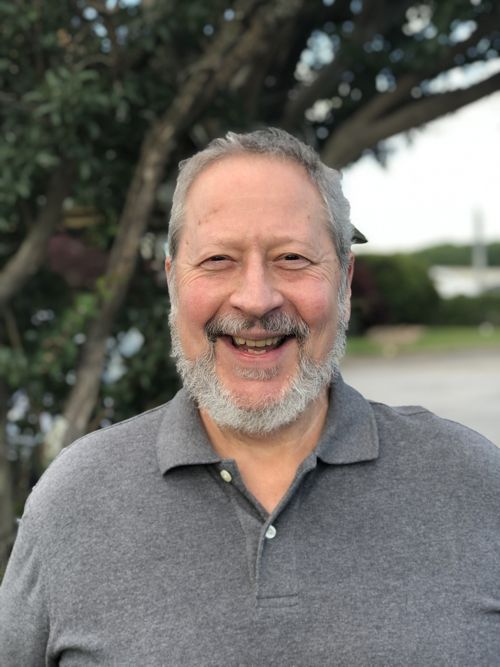
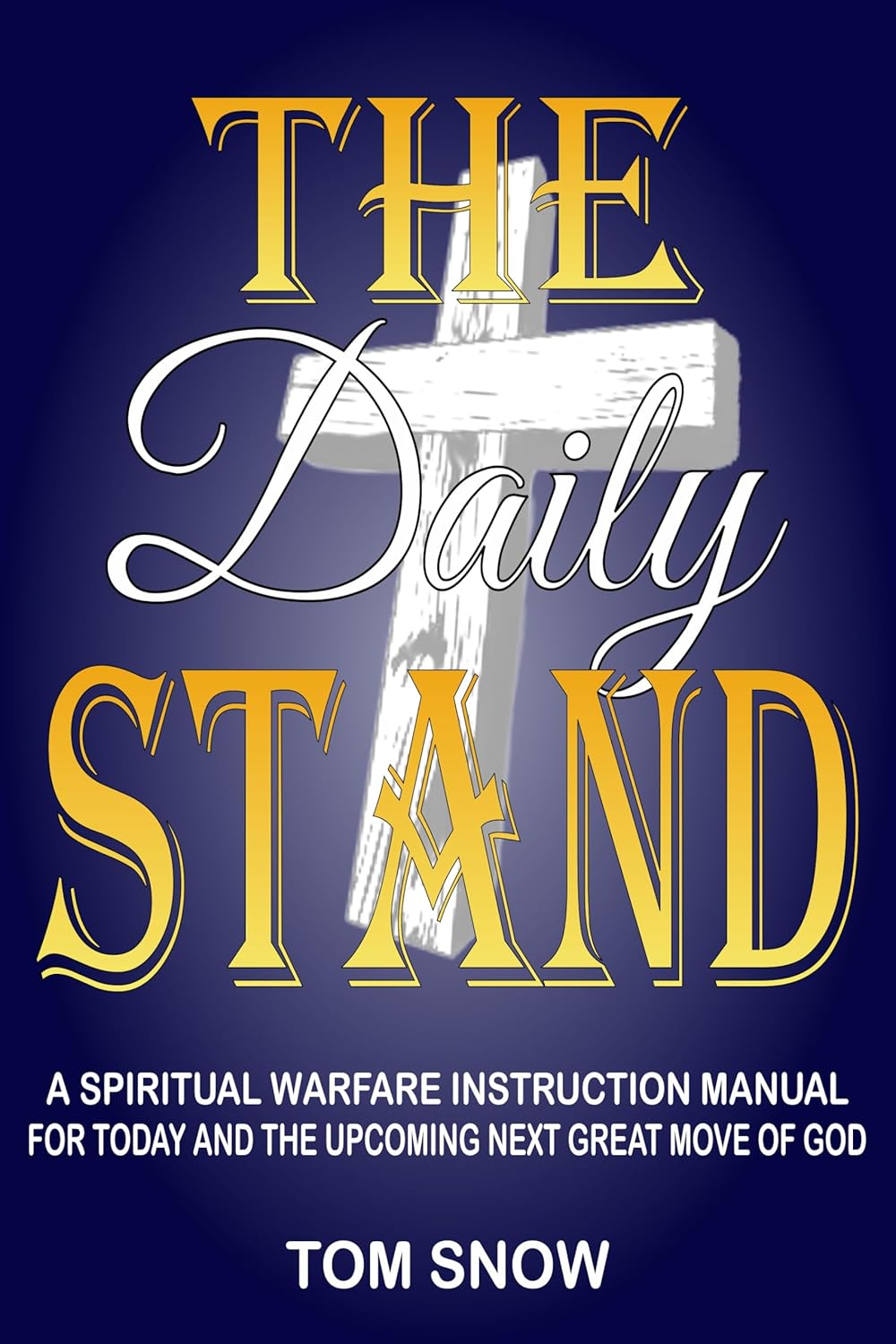
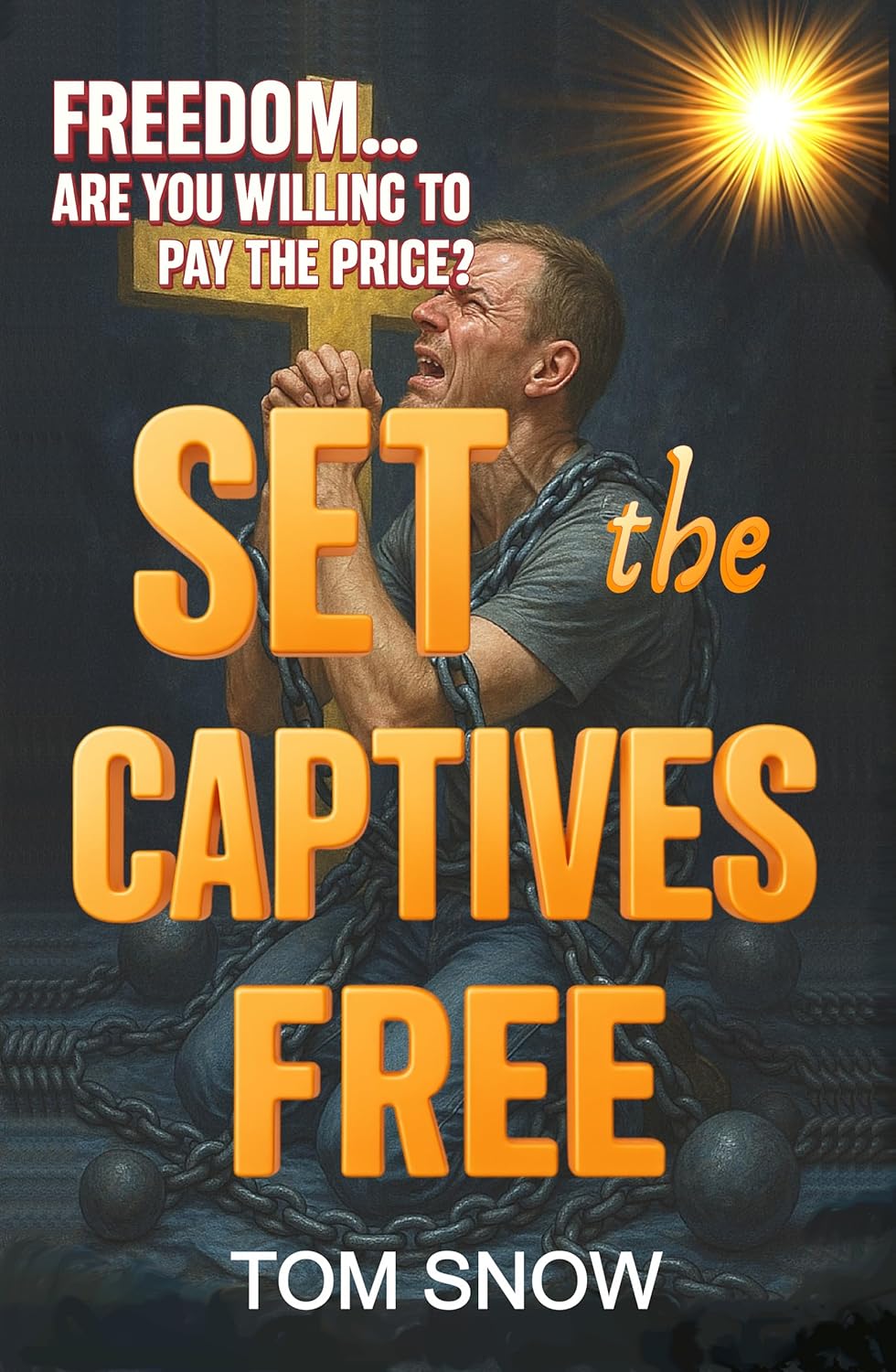
Tom Snow, founder of the Just to Be Clear Teaching Series and author of The Daily Stand and Set the Captives Free, shares powerful insights on spiritual warfare and the freedom found in Christ. He teaches that we cannot walk in God’s authority until we first walk in His anointing. Over fifty years ago, while battling terminal cancer and grieving his mother’s death, Tom encountered the Lord during the Charismatic Movement and God miraculously healed and transformed him, calling him to equip believers to walk in the anointing and stand boldly in God's authority.

Tom Snow

Founder of the Just to Be Clear Teaching Series, author of The Daily Stand and Set the Captives Free, engineer, inventor, entrepreneur, fisherman, husband, father of five, and grandfather of eight.


 These are Tom's favorite scriptures...

About 50 years ago, you were diagnosed with terminal cancer.  Can you take us back to that season of your life? What was going on? Was it at the same time that you lost your mom, too? 

Yes, this is all involved. This is in the mid-to-late 1960s. And I will make it a little shorter than usual. If I were to tell you the entire story of what happened here, it was both challenging and wonderful when God intervened. This part of my testimony is chapter one of the first book. But in the late 60s, I was a teenager in high school. God gifted me with a good brain, and I loved math and science. I also had an ego, and the way to have my father’s approval was to be an engineer and excel in math and science. My two older brothers didn’t care, but I managed to get his attention. My father didn’t fish or play ball, which I wanted to do. He just wanted to do math and science, and I knew trigonometry by the time I was in the sixth grade; I would sit at the table and learn from my father. I was winning state science fairs in junior high and high school, and one year, I wanted to create a new invention. Manufacturers used asbestos to make car brakes from the time cars were invented, likely until the 1970s and 1980s, because it could withstand high temperatures. Medical studies revealed the dangers of asbestos and the lung diseases that caused cancer and heart disease, but people were mostly unaware of this. It wasn’t like nowadays when we have a ceiling tile break and we go in a hazmat suit because there might be one fiber of asbestos. Well, I did some research; back then, there wasn’t the internet, so I went to the library. My studies revealed that brake shoes worldwide released 60 million tons of asbestos dust into the air annually. Think about that. We worry about one little fiber, and yet here we are, breathing it in and out, wondering why the world has so much sickness. This is one reason I wanted to create an invention to help address that issue. Ego was involved, but I wanted to create an invention to prove to my father what I could do. 

So, I built a device designed to encapsulate every brake system of each wheel. And as you drove down the road, the wind would blow through it, capture it, and put it into a bag in the back that you could dispose of. There was a good intention, but to create the invention, I collected asbestos dust by going to the brake shops, where they had brake dust lying all over the floor. Piles and piles of it because nobody worried about asbestos back then. I would get bags and bags of it, and they would let me sweep it up, bring it home, put it into my invention in the basement, and let it run through the system because you can’t blow it like sawdust; it doesn’t weigh the same. It was heavy and dense because I needed to prove that the wind in my invention could pick it all up and put it in the bag. Initially, it’s not completely sealed, and mounds of dust are flying through the air. Not safe. God gave me brains, but I didn’t have common sense, at least not when I was a teenager. And I already knew the problem with asbestos, even though it wasn’t popular, so I created this invention. My mother, father, and I were the only ones living at home at the time because my two older brothers were away in college and the military, and my parents worked long hours. My mother was the only source of love for me and was my cheerleader. She would come down to the basement with mounds of asbestos dust flying and cheer me on as a good mother would. Fathers in that day were really tough—he disciplined with the belt and the fist. He belonged to a different generation. You didn’t want to be on his bad side.  The following year, I won my state science fair—big deal. And the year following that, my mother got cancer that spread throughout her whole body. The double mastectomy and hysterectomy went into her lymph system, settled in her liver, and killed her. I was devastated because she was the only source of love I had, and now I didn’t care that my invention was patentable or that I won the state science fair. I don’t care about anything because I just killed my mother. That’s the guilt I was carrying as a 14- to 15-year-old boy. Nothing mattered anymore. Thankfully, my mother wasn’t afraid of dying, and she had met the Lord, and He was gracious to show me that later, after I came to know Him. One month after my mom’s passing, I noticed a rock-hard tumor in the middle of my gut that was about the size of a walnut. I knew that was cancer, and I decided I wasn’t going to tell anybody because with the guilt I had, I believed that I deserved to die.

Then, God began to give me this vision day in and day out, and it would make me understand eternity was there and that the world didn’t evolve around me, and I was going to die, and the world wasn’t going to stop when I stopped. One day, as I was sitting home alone, not knowing what to do and afraid of eternity, and hoping that God, who’s way out there, would accept me for what I did to my mother, God spoke to me audibly. It’s the only time I’ve ever heard the audible voice of God in this way. We all can hear the still, small, quiet voice that His word promises us. When He spoke, the entire room filled with sound, like it was roaring thunder, with rivers of living water flowing all around me. And yet so full of love, which dwarfed any love I’d known before. My entire body and being felt that love. His love surrounded me, and the presence of God was so fabulous. I’ve seen and felt his presence in the charismatic movement, but never to this level—it was just beyond anything you can imagine. His presence was there—the God of the universe, who I thought was out there somewhere. I didn’t know if He accepted me for how I had mistreated my mother and for all the guilt I had, but I wanted to get there. When He spoke to me at that moment, He said two things. He said, “I love you,” and "Someday, I’ll provide your perfect mate for you." Now, the first part, He has just proven with the love that surrounded me. There’s no question in the world that this was the love of God, and I was thinking, “The God of the universe took a moment out to talk to me,” and I was astounded. The second part made no sense because God didn’t get the memo that I had a tumor and was going to die—it initially was a walnut. Now it’s about the size of a softball. I thought, “God, don’t you understand? Did you miss the message? I’m out of here soon. I’m doomed to be six feet under. So someday provide a perfect mate for me—yeah, that doesn’t make any sense. No sense at all.” But let’s set that one aside. Maybe He’s been too busy taking care of the world. At the time, that’s all I can think of. Now, I know that He has every hair numbered on my head, but I didn’t know that at the moment. All I knew in that moment was that the God of the universe spoke to me. How do I reach Him? How do I get to meet the God of the universe? Because I’m leaving soon. How, how, how? 

About a month later, my brother Bruce came home from college, walked in the door, and told my father and me a story. He said that he was on an LSD trip, and he called out to the Lord, and the Lord saved him and took him down off the trip. As he tells this story, my father and I's jaws hit the ground. Now, around 1970, our upper-middle-class family didn’t joke about drugs because people considered them as taboo as anything in the world. Nothing more than an aspirin. And my father probably thought Bruce drank with his buddies in college, but that was a wink-wink because he wasn’t even going to accept that. So when Bruce told us he wouldn’t have if it were just a joke, because if my father knew or found out he was doing drugs, he would’ve beaten him within an inch of his life, Bruce took a big chance when he told us this and said that he called out to the Lord. He said that he was on an LSD trip a year prior and had flashbacks for nine months, and he was never going to do it again, but his friends talked him into it. And this time, when he began to trip, he freaked out, but he’d recently heard the gospel and called out to the Lord, and He saved him and instantly sobered him. Bruce had a star-spangled banner and a fireworks encounter with the Lord. As I was listening to his story, I was putting two and two together. The God of the universe talked to me and said He loved me. How do I reach him? And here’s my brother saying that he just reached him. So, for the next day and a half, I asked Bruce, “How do you meet the Lord?” Bruce told me the scriptures and what to do. Well, I repented. I asked the Lord to come into my life, and I didn’t feel squat. Now Bruce got the Star-Spangled Banner, and I got a zero—goose eggs—and I’m like, “I don’t understand.” Now, the scripture is true, and every man is a liar, but in this moment, the lie of the man and the little demon on the shoulder is going, “You know what? God isn’t there. And what you thought happened a month ago, I bet that was just a dream. It probably didn’t happen. There’s no God of the universe who’s going to come down and talk to you, and all of this is baloney.” Suddenly, I go from guilt and grieving my mother to having hope, and the liar of liars now dashes that hope, the God of lies, Satan, and he’s speaking in my ear, going, “That wasn’t really God.” Now, I became angry at God because it seemed like He wasn’t real—He wasn’t available—He was still the God of the universe, far away—and all of a sudden, I went into major rebellion, and I became the worst of the worst.

I left being a brainiac at school, not to do drugs, but to drink, and became a teenage alcoholic at 16 years old. I would drink a fifth of whiskey in two hours and then be proud of it. So now I’m just going to live my worst life before I die, and I would literally wake up on the other side of the road four lanes away, and then wake up, and someone would push me back four lanes to the other side. At this point in my life, I felt I deserved to die because I thought, “The God of the universe doesn’t really love me—I’m nothing good.” There are a lot of badly bruised angels, by the grace of God, who were watching over me. Don’t ever knock praying relatives. 

Eventually, I sold everything I had and persuaded my father to buy me this little motorcycle, but to do that, I had to get a job and obtain a food handler’s permit, which was the only job available to a 16-year-old in 1970. Well, to get the license, I had to go to the county clinic and get an X-ray and a blood test, and I knew that this was going to give up my secret that I’ve been holding onto for six months, and then my father would know. He doesn’t show love, but maybe he could put his arm around me and somehow comfort me. I don’t care if he doesn’t find me medical help because I thought that I deserved to die. I wanted that little motorcycle so bad, so I got the blood test and X-ray, and in a few days, I got my permit in the mail. However, while walking home, I saw my dad’s car, which was strange because he usually worked long hours. And as I came up to the door, I knew because I knew. After all, I knew he had gotten the letter that day from the county clinic showing the tumor inside my abdomen and, probably, if they did an extensive blood test, could see it coursing through my veins. When I walked in the front door, I saw my father building a fire on an 85-degree day in April. He loves fire, but you don’t need one on this day. When I saw him, he looked at me and immediately threw the letter into the fire. I have a really sarcastic side to me, and I asked him, “What are you doing? He replied, “Nothing.” I preceded by saying, “Why did you build a fire?” And he said, “I’m just burning trash.” I continued by saying, “Really? Hey, what did you throw in the fire? That looks like a letter. Was that a letter?” And my father denied it by saying, “Oh, no, no, no, no, no. It’s just trash.” And I’m like, “Sure you are.” I decided to back off and give him some space so he could process what was happening, as he had recently lost his wife and would soon lose his son as well. I knew I was going to die for seven months, and he just found out. 

About a week later, I come walking in from high school again, and his car and another car are in the driveway. When I walk in the house, two insurance agents are sitting in the living room with my father, and he says to me, “Tommy, come on in. Why don’t you talk to these guys?” My father was taking out a life insurance policy on me, and inside, I was burning up with anger, and I felt like hitting the roof. So I’m thinking to myself, “Are you kidding me? Now, I understand you’re grieving my mother, your wife. I understand you just found out about me, but are you kidding? No medical attention or care for me, and he’s planning to take out a fraudulent life insurance policy on me. We’re an upper-middle-class family. Maybe he needs enough to bury me? Maybe it’s a small insurance policy to help pay the costs of burying me, so I played along as he sells them this song and dance. 

Remember, I have this mind that God gave me, and I’m calculating; what am I really going to do instead of just blowing it for him here? Let me think about how I can angle this for me now. Ultimately, the insurance agents said, “Tom, we’ll need to go get a clean bill of health; have him go see his doctor and get a clean bill of health, and we can grant it.” At that point, my father jumps in, “Oh, no, no, no, no, no. Tommy’s in sports. He’s been in sports and gets a physical every year. Didn’t you take one about six months ago, Tommy?” That part was the only truth he was saying. I replied, “Yeah, I did. Well, back when I went to school, a boy’s physical consisted of their height, weight, blood pressure, and ‘turn your head and cough’—it doesn’t check you for cancer. My father continued to tell them, “Hey, I could go get a copy from Tommy’s doctor and give it to you. Would that work? They said, “Oh, okay, that’s fine,” and they granted the policy. Well, if it had only been a few thousand dollars, even no more than 10,000, whatever, it would have been one thing. But by today’s standards, it would have been worth millions. My father was going to cash in on my death. Now my anger is no longer just at God—now I’m angry at my father too. We had a decent relationship in terms of math and science and got along fine, but now I hate my father and harbor deep wrath and unforgiveness. 

I went berserk and sold everything I had. With the money, I bought an old Harley—just boxes of parts—and built it into a chopper. Not only did I start drinking, but I also began riding with motorcycle gangs. If you remember the Hell’s Angels, I rode with them. At just sixteen years old, with hair halfway down my back, grease-stained clothes, and hands constantly rebuilding that bike, I looked like a complete scuzzball. For eight months after asking the Lord into my life, I was in total turmoil. The devil had his way with me, whispering in my ear, laughing as I ran deeper into destruction.Anger and unforgiveness consumed me, becoming strongholds that pushed me downhill fast. The devil played me like a fiddle. I thought I was independent and even claimed to be a “happy agnostic,” but Jesus said, “If you’re not with Me, you’re against Me.” There’s no middle ground. The path is narrow, and I wasn’t on it.During those eight months, I kept trying to get my motorcycle running right because I had a plan: to blackmail my father. Every time I rode to the city limits, the bike broke down. It was as if an angel stood in my way with a sword, making sure I never got far. I planned to tell my father I knew about the fraudulent life insurance policy he had taken out on me and demand thousands of dollars to fund one last ride across the country. Secretly, I intended to end that ride at the Grand Canyon—driving my Harley off the edge—but God had other plans. And He gave me a praying mother.Prayer is powerful. It doesn’t always get answered when or how we want, but it is heard. My mom’s prayers, even when I felt nothing, were protecting me. I thought I had asked Christ into my life and got nothing in return, while my friend Bruce had this dramatic experience. But I didn’t realize my guilt, hate, and unforgiveness were blocking everything.One night, sitting with my biker friends, drinking cheap wine, the conversation turned—strangely—to spiritual things. I told them about Bruce, expecting laughter and scoffing, but none came. So I told them about my own attempt at asking the Lord into my life, saying, “Nothing happened.” The moment the words left my mouth, conviction hit me. I knew I was wrong, and in an instant, the rivers of living water Jesus promised in John 7 broke through. His presence flowed from deep within me. Suddenly, I was sober. I looked at my biker friends and said, “I have to go.” I rode home that night fully sober, entirely changed, and fully aware of the true and living God who loved me and had been there all along.From that moment, everything shifted. I wasn’t afraid of dying anymore. I knew where I was going. To live is Christ, to die is gain. I was finally free to live in God’s love. My high school classmates couldn’t believe the transformation—from brainiac to biker to “Jesus freak.” But I didn’t care. I told everyone about the love of God.God led me to a church where I could grow. I devoured the Word daily, learning to hear His still, small voice. I learned to discern His voice from the others. And in those days of the Charismatic Movement, the power of God was everywhere—healings, hours of worship, and the tangible presence of the Spirit.Meanwhile, a tumor inside me that had started the size of a walnut had grown larger than a football, hard as a rock. I had lived with pain for years, but I didn’t care because I thought I’d soon be with my Heavenly Father. Then one night, while riding my motorcycle and talking to God, He spoke clearly: “Do you see in Isaiah where I said, ‘By His stripes you are healed’?” “Yes, Lord.” “Do you see in 1 Peter where I said, ‘By His wounds you were healed’?” “Yes.” He then said, “Isaiah was looking forward to the cross. Peter was looking back. I completed everything at the cross. Would you like that healing?” I halfheartedly said, “Sure, whatever.” But in that moment, something changed. Within 24 hours, the tumor that had consumed my body dissolved completely. It melted away, leaving no trace. God had saved my soul, rescued my life, and even healed my body. 

To hear more of Tom’s testimony shared on Truth, Talk & Testimonies, listen to the broadcast beginning at the 43:00-minute mark. In this segment, Tom explains, “We can’t walk in God’s authority without His anointing.” Like the Bereans in Acts 17, he encourages us to study the Word, pray, and dwell in God’s presence. What does it truly mean to be “in Christ” and fully yielded to Him? Tom also shares how God healed him from unforgiveness, along with insights into his ministry and books.

Tom's Ministry Site, Books, and Social Media Platforms

(Click on the photos to be taken to Tom's website, his books on Amazon, and his social media sites.)


Tom shared his story on...

Truth, Talk & Testimonies

Tom Snow's testimony is also on...

VictoryEmbraced: Truth, Talk & Testimonies

16Jul

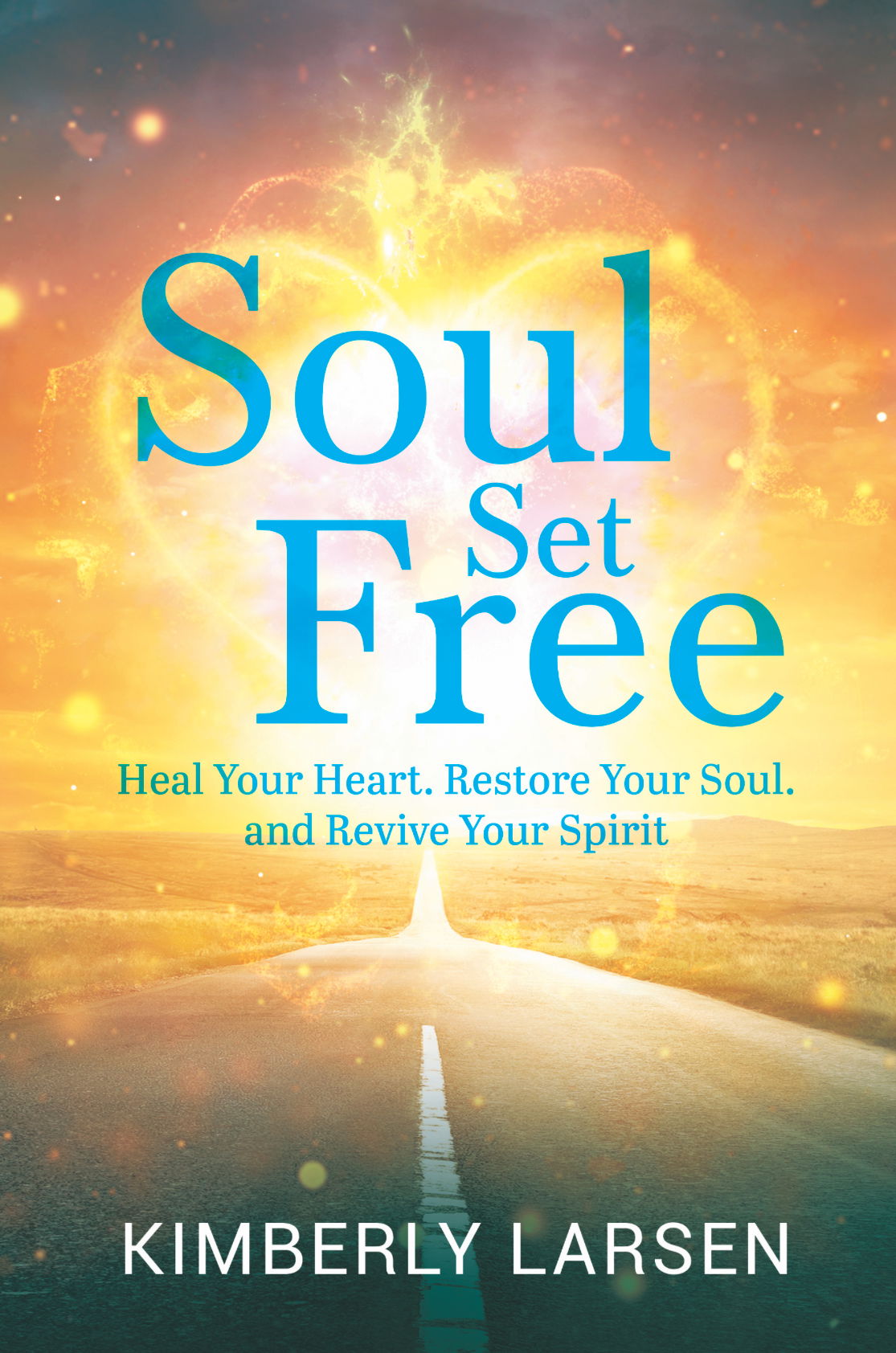
In Kimberly Larsen's Journey of Deliverance and Healing, Kimberly shares her incredible testimony of being set free from pain, fear, and spiritual bondage. Once bound by trauma and hardship, Kimberly experienced a life-changing deliverance through the power of Jesus Christ. Her story is one of deep healing, transformation, and bold faith—a reminder that no matter how dark the past, God can restore, redeem, and set your soul free. Whether you're seeking freedom, healing, or renewed hope, Kimberly's journey will encourage your heart and strengthen your faith.

Kimberly Larsen

Coaching, Online Training, Counseling, and Author of Soul Set Free


These are Kimberly's favorite scriptures...


Kimberly, can you share a bit of your early life and how events like your parents' divorce and relocation impacted you and your emotional journey?

I was born into a Christian home, which provided an excellent upbringing in a small farming community. In my early childhood, I don't have any memories of ever feeling anything but loved, safe, and happy. When I was 9 years old, though, my parents divorced, and my world got a little shaken from that.


We moved off the farm and into town. So, that was a whole new world. And that is when I started to feel anxious and insecure. I knew I was loved, so nothing was terribly wrong, and yet my heart felt bruised—I had a hard time getting started again. And then as soon as I got comfortable in that place, we moved again. And I think it was like a double whammy where that pain I had already begun to feel was reinforced. And I didn't fully realize at the time that I had a broken heart because of that. I was trying to keep up with what was happening and do the best I could. And so there wasn't like one big accident or anything like that, but it was just this doubling up of the same type of pain happening twice. Kids are resilient, and so I think that, from a parent's perspective, they're doing pretty well. Even if you asked them, they would likely say, "I'm okay." I think a lot of what was going on was deeper than I understood, and it started to show up later on when I started hanging out with the wrong friends. So as a teenager, I began to walk away from my faith kind of—I never completely left my faith, as I always continued to believe in God, but I was looking for attention and friendship and love, and, you know, I didn't have a lot of parent supervision because my mom was a single mom working and my dad wasn't in the picture. We did a lot of things to keep ourselves entertained, and none of it seemed all that bad at the time. However, it eventually got worse.


You experienced an abusive relationship in your teen years that led to the beginning of spiritual battles. What were some of the doors that opened that may have caused demonic influence and oppression, and how did that affect your life?

For a long time, I thought that it was because of the abusive relationship as a young teen that the demonic oppression came, and that was the door that I had opened. Still, then, the Lord brought me back to some other memories and showed me that I started having these demonic nightmares right before the relationship began. And so that helped me to understand that it was probably a generational door that had been opened even before me. There was similar abuse in my mom's and grandmother's lives, so what happened is I started having attacks in my dreams, but then I would wake up, and I would still feel the attack. So I would feel choking happening, and this extreme, intense fear in the room. It happened over and over, almost nightly, where I was having terrifying dreams, and it went on for years and years. There were times when I woke up, and in the dream I was dreaming that somebody was banging my head, and I woke up and it was actually happening, and then I would have a headache the next day. So it was a dream, yet it was also becoming a reality. They were spiritual attacks in my sleep that are known as sleep paralysis. 


Were you able to talk to your mom about what was happening?

I kept a lot of this a secret because when I talked about it at all with people, I could sense right away that they were kind of like, What? And I just was afraid to talk about it. I didn't discuss it much. I would say to people that I was having nightmares, but I wouldn't explain to what extent. Sometimes I would have wild animals in my dreams that were chasing me. Those I would talk about. So, everybody knew that I had bad nightmares, but the actual experiences with the spirits—that part I wasn't sure how to talk about. It wasn't until later in my life, after I got married, that I started speaking up about it. And even then, people did not know what to say to me. And so, I thought it was just spiritual warfare and that this was one thing that Christians had to deal with. I learned that if I said the name of Jesus, it would stop, so I thought, 'Okay, this happens to people.' You speak Jesus' name, and then it stops. But I did not realize that I could get free of the nightmares. If you speak the name of Jesus, in that very moment, the evil one needs to flee from you. There’s a Bible verse that says… “Submit yourselves therefore to God. Resist the devil, and he will flee from you.” James 4:7. I always thought it was resist the devil and he will flee from you. And it was later that I realized I truly understood the beginning of the verse: 'Submit to the Lord.' And so your life needs to be submitted right to Him. And when you submit to Him in your everyday life, you will not receive the same attacks as if you're only using His name to ward off a nightmare. As I walked daily with Him, I learned that I was more in authority and dominion. I had to overcome a spirit of fear because I was terrified of these evil spirits, and I'm not afraid of them anymore. If I have even the smallest experience with them now, I'm ready to fight them, and I know my authority, and I know they have to flee in Jesus’ name, but it took years of building myself up to understanding my authority, and there was a lot that I didn't understand about Christianity—there were a lot of missing pieces for me, and as those pieces came together, the stronger I became. Now, I'm not just fighting my own battles. I'm helping other people fight theirs. And we can think we know who we are, but we need to study who God says we are in Him and truly know and understand it. And in fact, I realized that it was wrong of me to believe anything less than who God says I am. And I was pretty insecure, and God doesn’t want us to have a spirit of fear. He wants us to have a spirit of power, love, and a sound mind. So if you’re somebody who is walking in timidity, you need to actually repent of that and then ask the Lord to help you grow into boldness and to be who you're called to be as a son or daughter in Christ. 


What was the turning point for you—when did you realize you needed to surrender to God fully, and what did that surrender look like?

There were a couple of turning points. One was that I got lost in addiction. I was drinking and partying all the time with my friends. I was smoking. I was even, I would say, even addicted to my friends because I felt I needed to be with them. I think I was looking for attention and love, and that's why I loved my friends so much - because I just felt like I was part of something. You know I could not stop on my own, and I got afraid and then rededicated my life to the Lord, and I was delivered from those addictions overnight. I'm so grateful that the Lord pulled me out of that. 


Secondly, when I was diagnosed with cancer for the second time—the first time was hard enough, and I prayed my way through that and survived. And then two years later, it had returned in a different area, and I kind of just gave up. And I just said, “I give up, Lord. If you want my life, take it.” I was tired of hoping and trying to stand on my faith, only to feel like it was when I received bad news. In that moment, I said to Him, "But if this is an evil attack on my life, I refuse to die early before my time." And that is when I started to experience deliverance, without even knowing what it was, because I began to cough and almost dry-heave. Then, I felt a beautiful presence come into my room. I couldn't see anything, but it was as if I were enveloped in a cloud of peace and joy. I had a beautiful experience, and the spirit of fear left me; I was no longer afraid of my situation. Even though it was still a terrifying diagnosis, I felt a presence from heaven. I just knew God was doing something, and that I needed to trust Him. So, I Googled… “Can Christians need deliverance?” Or something like that, and this YouTube channel came up that said how to be self-delivered. And as I followed through with that and prayed for renunciation, asking God to deliver me, I experienced even more deliverance. 


And for a week after that, I felt like I was walking on clouds. I was so excited—it was the most wonderful feeling, like nothing you could experience on earth, that is for sure, and so I had this self-deliverance. Then I became curious: I needed to understand what had happened to me more, and I wondered why nobody had told me about this before. I searched through the scriptures, and it's all in the Bible; Jesus performed many deliverances. Then I embarked on a longer journey, and I experienced many more significant and minor deliverances. After that, it set me on a path of inner healing because a lot of the places I needed deliverance were tied to emotional pain. And when I had that emotional pain healed, then that was when I no longer needed deliverance anymore.


Is there anything else you can encourage others about if they need deliverance, based on your experience? 

Yes. Deliverance is truth chasing away lies, just as it is when Jesus says, 'I came to set the captives free.' Much of our captivity lies within our minds, and even a tear rolling down someone's cheek who has just realized that when they thought they weren't loved, they are loved. I see that as deliverance. Some people are stuck in addiction like I was and they can't get out and when they truly ask God for help, and He makes a way for them, that's deliverance. Someone who is constantly emotionally triggered by people or circumstances. When they realize that there's a reason for the trigger that's causing them to feel angry, jealous, or insecure, if they can find out where their soul was hurt and go back to address it, they will find that they're set free and no longer triggered. And so I think a lot of deliverance has to do with emotional health. There are many things that deliverance is. God could deliver you from one place to another, or He could deliver you from believing a lie to understanding the truth. He could deliver you from a toxic relationship. Deliverance is vast, and it’s something that God has for us. He wants us delivered, set free, and walking in who we are meant to be. He wants the things that hold us back to come off of us so that we can then do the things that we are assigned to do on this earth and do His Kingdom work. And until we personally experience the deliverance we need, we are held back from reaching our full potential. Deliverance doesn't have to be scary. Some people are highly demonically oppressed, and they need serious deliverance. Others simply need to be guided through exercises using Scripture that help them with forgiveness and other aspects of their lives, because Scripture is truth. If we don’t fully understand scripture, we might need someone to help us unpack that truth. 


How is inner healing different from someone simply moving on, and what practical steps helped you walk it out?

Yeah, it's so different when you invite the Holy Spirit into a situation, like you can have freedom from a problem that you've been getting counseling for, for 20 years, in one second with the Holy Spirit. So, I would say that inner healing is about asking God to reveal the hurt places in your heart and to search your heart to find them. And you'd be surprised. They're not always the big, bad, scary things. A lot of it comes from when you're young because you don't yet have the capacity to cope emotionally. And you know, time does not heal you. In fact, it often buries and compounds issues. Jesus is what heals us. And so because He is not in time, He can go back to that place when you were a child, and you can invite Him now to come back there and have Him heal you. He can heal your memories and triggers—He’s in the business of healing people, and every time I work with someone, He shows up. So, I don't even feel like I'm doing a lot, other than facilitating an encounter that they're having with Him and encouraging them to know that, 'You think you can't hear Him, but you can.' And teaching them this is how you hear Him. And as soon as they're connected to hearing God's voice, they can move forward. When they need help with something, they simply go to Him and listen to Him. And then, so my program is actually only 3 months long. It's not a long program because we jump in and I connect them to the source, which is the Holy Spirit. And once they learn how to work with Him, they no longer need me, as they have exercises that they can use with the Holy Spirit and Scripture. 


Could you share how your ministry began, who it serves, and how you help people find freedom in Christ?

It's only been two years since this happened to me, when I experienced deliverance for the first time. Within those two years, I have taken a double degree program. I now hold degrees in business and ministry, and the Lord has also asked me to write a book. I couldn't believe God was asking me to do all He's having me do, and yet here I am, two years later, and the website is up and running. I am working with clients and getting seriously transformational results. I am always so surprised at how God shows up. 


For someone who feels stuck in pain, fear, or spiritual bondage, what word of hope would you share with them? 

Have faith in God. And if you feel that your faith is weakened or small, you need to find ways to stir it up, because it is real—the promises of God are real, so I would say, have faith and grow in your faith, your relationship with the Lord, and His Word. 


Kimberly shared her story on...

Truth, Talk & Testimonies

Kimberly's testimony is also on...

VictoryEmbraced: Truth, Talk & Testimonies

02Jul

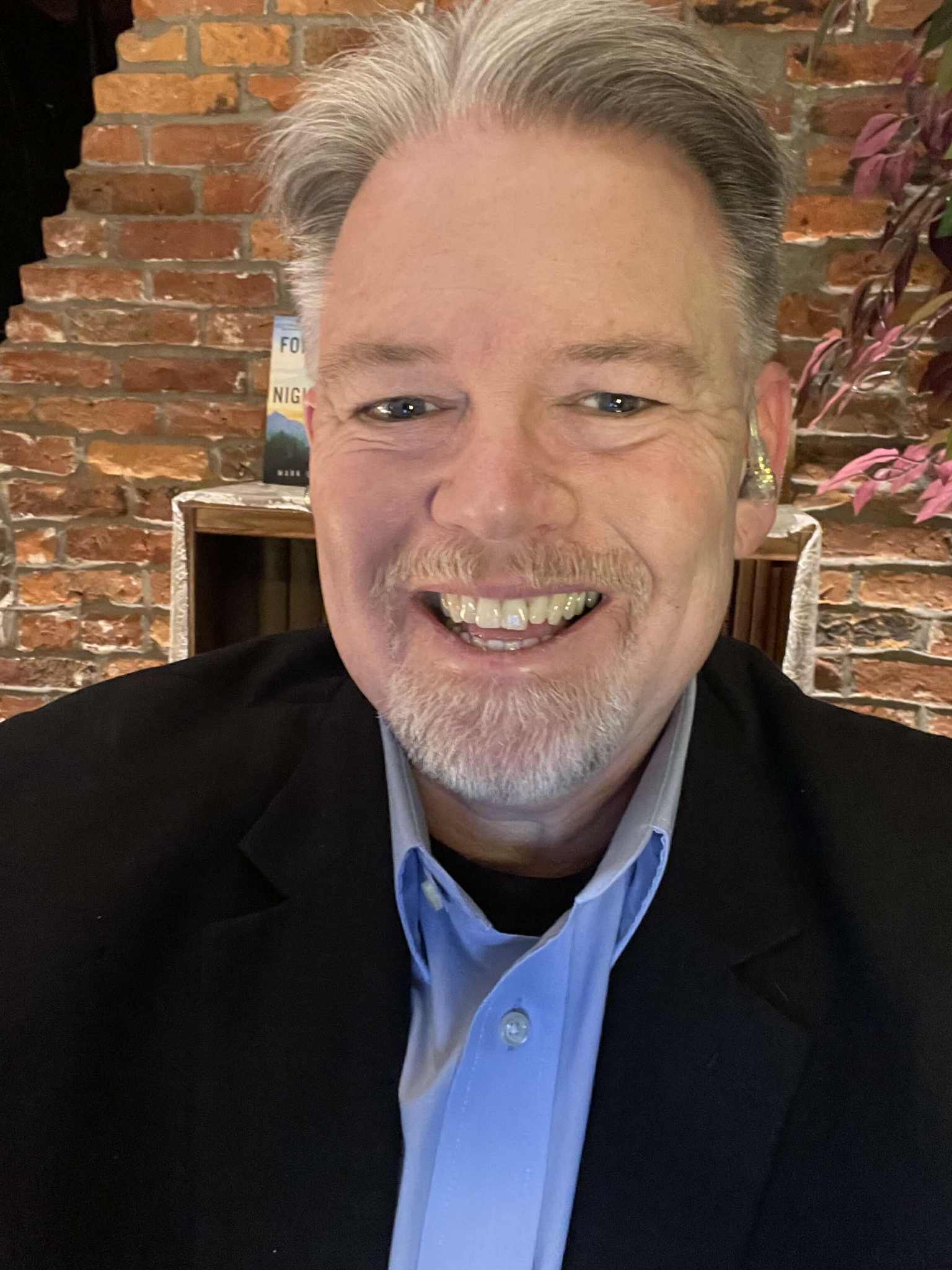
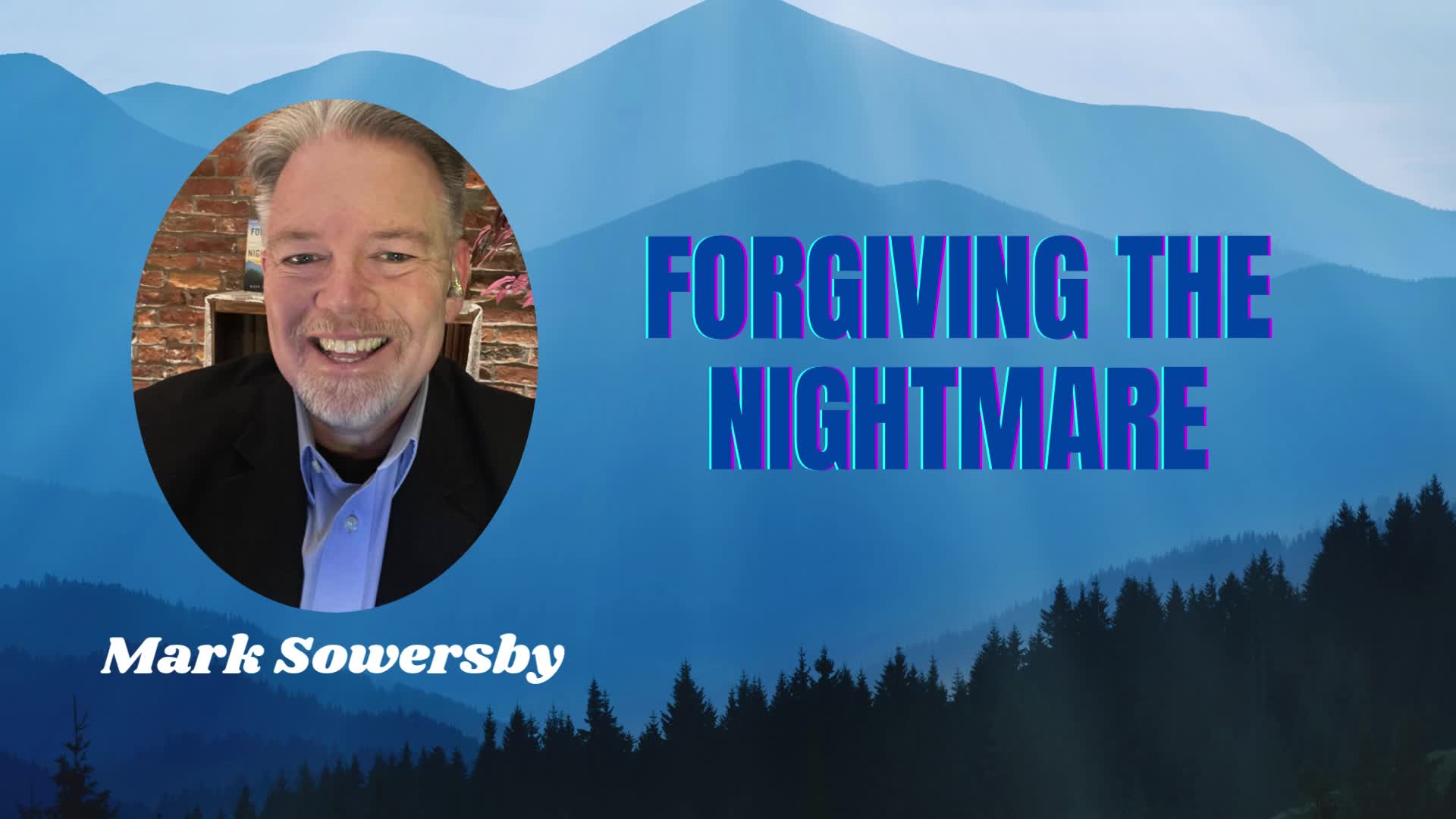
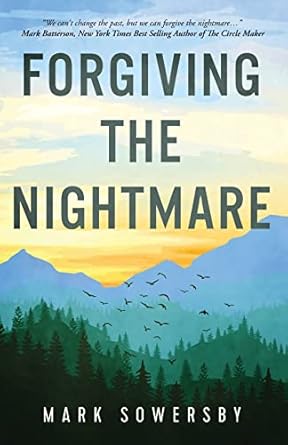
Mark Sowersby is an ordained minister with over 25 years of experience in ministry. He and his wife, Jennifer, have been married for twenty-two years and are parents of four children. He’s currently the pastor of Calvary Community Church in central Massachusetts. Mark and Jennifer launched the Forgiving the Nightmare Ministry in 2020. He holds a Bachelor of Arts degree in theology from Zion Bible College/Northpoint Bible College. Forgiving The Nightmare is a testimony of forgiveness, God’s grace, and overcoming amid life’s hurts, pains, and abuses. Mark has been rescued and restored through prayer and the power of God’s Word. His testimony of reconciliation is timeless yet remains incredibly important in today's world, where broken people, shattered dreams, and damaged relationships prevail. There is hope in Jesus.

Pastor Mark Sowersby


These are Pastor Mark's favorite scriptures...


Pastor Mark, I read your book, Forgiving The Nightmare. It’s wonderfully written. You have a remarkable healing that God has given you, and in Forgiving The Nightmare, you describe the nightmare of abuse and suffering that you have gone through for years. Can you please share what happened in your childhood?  

I’d be honored to share it with you. And again, thank you so much. When I reached out to you, I just wanted to find places where I could lift up the name of Jesus and share the testimony of where God has brought me through. Throughout my whole testimony, I don’t have the answers, but God does. So, my testimony, unfortunately, is an ugly one because it deals with abuse and neglect. Far too many people share that same testimony. At the age of seven, my mom would marry a man 20 years her junior. He came into our home, and he would abuse me in every way, shape, and form. He would emotionally, physically, sexually, and verbally abuse me and take everything from me from the ages of 7 to 14. And all those years living through that experience, I was held down and held back and just trapped in fear, insecurity, and pain. I didn’t know any other way in those seven years. The pain was the atmosphere and oxygen that I lived in. All around me was the abuse. I didn’t know any other way. And at 14 years old, I didn’t understand why I was 14 and not 13 or 12, but something clicked inside me, and I fought back. I fought back in two ways. First of all, it was a physical way. Now, it wasn’t a Rocky Balboa moment or a Mike Tyson moment, but I pushed my attacker off me, and I fought back physically. Still, at the same time, I found somebody in my family who would stick up for me, somebody who was strong enough and who believed me. I went to this loved one, and I told them about what was happening. It was a different time, as I was part of the late 1970s and early 1980s generation. People didn’t talk about things like this, even when they were happening. You didn’t tell anybody anything or deal with it or talk about it, but it was the underbelly of many people’s stories. So, from 1977 to 1984, I was being abused. And I went to this loved one, and they protected me with their might, with their power, and with their spirit. And because of those two events, at 14, I can tell you the abuse ended. And it never came back. I was never physically abused again after being 14. The abuse stopped because of those who protected me. Now, I wish I could tell you that was the end of the story. And I could say, you know, after 14, everything was peaceful and easy, but it was just the beginning of Forgiving The Nightmare. 


How did you first come to know Christ, and how did you go from just surviving to beginning to thrive? 

Well, I found myself back at my mom’s house, and I was that kind of kid who never wanted to be home and outstayed my welcome—that kid for whom they set another plate for dinner. At the time, we were living in an apartment complex, and I spent a lot of time at the pool. I was a 15-year-old kid, and I was at the pool in the middle of the courtyard. There was a lifeguard, and I think she was about 16 years old. She asked me to go to church with her, and to be honest, I would have gone anywhere that lifeguard asked me to go. She invited me to church on a Friday or midweek night, and I walked into the church, having never experienced the charismatic, evangelical, or Pentecostal expression. I never saw hands being lifted, drums being played, and guitars being strummed. And I went in there, and the youth pastor had a mullet. It was the 80s. They explained the gospel and spoke of God’s love. I knew I wanted and needed that love, but I wasn’t sure if God loved me because I didn’t like myself. The abuse stole not just a pound of flesh but also my dignity, value, importance, and so many things emotionally and psychologically. As much as it stole the flesh and took that away, I was also confused, broken, and kind of not understanding it all, but the church poured out its love for me. And on a Friday night, not too many weeks after my first visit, one of the youths was giving me a ride home. He was cool. He had a car, and I didn’t. He asked me right there in a parking lot if I wanted to make Jesus Christ my Lord and Savior, and I said what we call the sinner’s prayer. Lord, come into my heart. Forgive me of my sins. I receive you as my Savior. I said that prayer, and I was probably too young or too immature to understand the depth of the prayer that I was saying. But thank God He knew what I was saying. And then there I was, the summer when I was 15 or 16 years old. There I was in the middle of that summer. I asked Christ to become my Savior. And there, the journey began to walk with Jesus. 


Did you yearn for the peace that you felt in church?

Of course, I craved the peace, grace, and mercy. All I knew was I felt a love and an acceptance like I had never felt before. For me, the church truly became a sanctuary, and I don’t just mean that in a holy sense; I mean that in a protective sense, like a bird sanctuary or an animal sanctuary. I was there every time the church doors opened. I was there for senior adult meetings. I was even there for some of the MOPS meetings. The church doors opening meant I was there; it was a safe, accepting place where I began to learn about God, God’s love for us, and the Holy Spirit. I started studying God’s Word and grew in my faith.


Was it soon after that you realized you were being called to be a pastor?

Well, you know, any time God has called me to something, I’ve wrestled because of my insecurities, my fears, and because the shackles that were holding the lies of my past were trying to steal the hope of my future. And there I was again. I was just a young man, about 16 or 17 years old. By this time, I had become a fixture in the youth group. I attended all the pizza parties, roller skating rinks, sleep-ins, and late nights with the camping group. I was a part of this youth group because it was a part of me. And I remember the first time I raised my hands in prayer. I thought the whole world was looking at me, but there I stood before the altar, and I felt God quicken my heart and say, “Mark, you’re going to go to Bible school.” I wrestled with that because I have dyslexia and was a special education student. I usually tell people I didn’t learn how to read; I learned how to duck. My parents didn’t raise me; I made it through. So, my skills were learning how to duck and how to become that chameleon, how to fit in by being the funny kid or sports jock. I did what I did to survive. So, there I was, about 17 years old, with this call in my heart and feeling so insecure, saying, “God, you know, I don’t have the ability. I can’t read well. I can’t write well. God, how can you call me?” But God was faithful, and He called me to Bible school. Now, I wish I could tell you again I got up from that place and said, Amen. But there lay the journey, and God had a quickening in my heart, and I found myself in my early 20s. It was a few years later that I found myself at Bible college. 


When did you surrender entirely to Christ? In the book, you discuss the importance of complete surrender and forgiveness, as well as surrendering at the altar.  

Amen. And you know that process wasn’t a one-time process. That was a process that took many times of coming to the altar and allowing God to begin to crack that shell, if you will, to start speaking into my life, to begin to soften that heart of stone. And I remember that I had some people who loved me the most. And you know, sometimes people who love us and want to help don’t always give the best advice. It’s not because they’re evil or mean. It’s because they want to say something. And I remember somebody said, “Mark, if you have the faith of a mustard seed, you can move a mountain.” ⁣ And I thought to myself, at 16 or 17 years old, what does that mean? So there I was in my prayer closet, and I said to the Lord, "Lord, what does it mean to move a mountain? What does it mean to have faith the size of a mustard seed?" Now, today, I know it’s measured in size. But at that time, God spoke to my heart, and He said, “Mark, will you move a pebble? Can you move pebbles?” And I said, “Lord, I can move pebbles all day long. I’ll be the best pebble-moving Christian you’ve ever had, God.” I’ll move pebbles to and fro, and slowly, the pebble becomes a stone, the stone becomes a rock, the rock becomes a hill, the hill becomes a boulder, and the boulder becomes a mound, growing bigger precept by precept, inch by inch. So again, it wasn’t the first time that I ran to the altar. There were many times that I kept going to the altar and laying myself on it, saying, God, help me because I was angry—I wanted my pound of flesh—I didn’t walk on water or float in clouds. I wanted my abuser to suffer. When I thought of hell, I wanted my abuser to go there. Again, I wasn’t this perfect saint with little wings. I had feelings. I had emotion. I had things taken from me. I was angry. I had questions—Why? How? If? What? All those things were rising up in me, but at the same time, God would bring me on this journey of forgiveness. And in that journey of forgiveness, I often say I was like David. Even though I had to walk through the valley of the shadow of death. Even though I had to walk out of this miracle, it still makes it a true miracle, just as much as one that happens suddenly, as much as one that unfolds over time. God helped me learn to forgive those who trespassed against me. God had to change me so that I could look at things differently. I didn’t start this journey saying, “I want to forgive the man who abused me.” I’m not that righteous or good. I started this journey by saying, “God, I want to know you. I wish to seek ye first and by knowing God, by seeking HimHe would bring me to forgiveness. I didn’t have the strength, the power, the knowledge, or probably even the heart at that time to forgive. I was angry. Someone stole something from me. There was an abuse given to me. I felt righteous in my anger. So God did. I didn’t say, “Okay, God, I’m such a good guy. Help me forgive those who abused me and raped me and stabbed me and beat me.” That’s not what I tried to do. This journey started with this kid going, “God, I want to know you. I want to know who you are. I want to know your Word. I want to know your Spirit. I want to be able to understand and grow.” And in that place, God would bring me. But again, it was seek ye first the kingdom of God. And that’s where it started. And even though I still wrestled with the flesh, and even though I still wrestled with the pain and the hurt, I was growing in God. As I grew closer to God, the things of this world began to seem strangely dim because God started to change my perspective. I saw Him first before I saw the hurt and the pain. God became louder. God became greater. His words became louder than hate. His love became sweeter than sorrow. However, it began by seeking God first. 


How do we know when we have truly forgiven and released the unforgiveness to Christ? 

Sure. And you know that’s a part of the journey, peeling the onion back one layer at a time. So, for me, it was just a straightforward step by going, “God, I’m giving it to you.” There are three things I want to share with you that I’ve learned about forgiveness. I always believed that forgiveness meant forgiving and forgetting, letting it go, and not making a mountain out of a molehill—let it go. The first thing I realized was that forgiveness is not the same as approval. Just because you say you forgive somebody doesn’t mean you’re approving of what they’ve done. You’re not accepting it; you’re not supporting it. You could still say, “What you’ve done was wrong, evil, and sinful against the law, and what happened is wrong.” I disapprove of it. I don’t accept it. I don’t want it. But yet, I can still forgive you for it. That’s the first thing I realized. The second thing I learned is that forgiveness isn’t a one-time event. God’s mercies are new every morning. And I realized that for me, forgiveness is that way. And the Lord’s Prayer says what? Help us forgive those who trespass against us. Before that, He says, Lord, give us this day our daily bread and help us forgive those who trespass against us. So, I believe that daily is for both things: the daily bread and daily forgiveness. And also the last thing I learned is a harder one. I learned I can have my boundaries. You know, those who have wounded me, I realized I could have boundaries to say, "You know what, I don’t have to have kumbaya moments." I could love them. I could give them to Christ. I could put them under the blood. I could say, Lord, they’re in your hands. I don’t have to put my head back in the lion’s mouth. You know, I can have healthy boundaries.


You shared in your book that unforgiveness not only affects us but also affects those around us because we often displace our anger and feelings onto them. Can you explain that?  

Sure. Let me unpack that with you for a few minutes. First of all, I’ll tell you one thing God had to do in my life was, again, as I said earlier, he had to change my perspective. And the way God did that is I’ll go back to when we were teenagers. When we were teenagers, we didn’t have a million channels to choose from. We didn’t have the phones in our hands. You know, I’m a Gen-Xer. So, you know, I drank water from a hose, and I came in when the streetlights were off. Mom didn’t know how to call you, but she always knew how to reach you. I remember being in high school in the early 80s; we only had PBS. And in our area, it was called Channel 2. And at Channel 2, our PBS station, Bob Ross, the painter. Everybody knows Bob Ross, and in half an hour, in my untrained eyes, he would paint a masterpiece. I’d be eating my bowl of cereal, coming home from school, and seeing the blank canvas become a masterpiece. At the end of almost every painting that Bob Ross did, he’d put a tree in front of the subject. So if he painted a lake or a cabin or a mountain or whatever he was painting, at almost the last two minutes of every show, he’d put a tree in front of the subject. And what he was doing, I found out years later by watching it, was changing our perspective. He was bringing the subject to life and giving it depth. He was saying the cabin is not as close as it looks now because there’s something in front of it. So it makes it look further away. And I thought about this all the time, like this old song that got caught in your head. I thought, "Lord, why am I thinking about this Bob Ross painting?" And one day, the Lord said to me, “Mark, if you put my cross in front of your hurts, if you put my cross of Calvary, my love, it’s going to put some depth. Sometimes, when we have pain and go through unforgiveness and sorrow, it’s so close that it pours out. It pours out to people, you know; it pours out to the people that we love. We think we have it hidden, but we usually have it buried under just that soft veneer, and as soon as it’s touched or we believe it’s going to get touched, we lash out, and usually, we lash out at the people who love us, but God is saying to put Him in front of that pain. Put me in front of that hurt. Put me in front of that sorrow. I’m so thankful that God has helped me change my perspective. I see Christ first. Oh, I don’t deny what I went through. I don’t deny that it’s a part of my story, a part of my narrative. It’s a part of my testimony, but it doesn’t define who I am. The worst part of my life does not have to define my life. God loves you, and he wants to set you free. He wants to give you freedom. 


Forgiving The Nightmare Film Trailer


Pastor Mark shared his story on...

Truth, Talk & Testimonies

Pastor Mark's testimony is also on...

VictoryEmbraced: Truth, Talk & Testimonies podcast platforms

04Jun

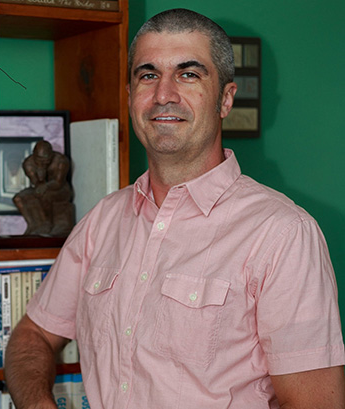
Samuel is a husband, father of two, and passionate about helping others live fully and lead themselves well. He specializes in anxiety, OCD, trauma healing, and couples work—using evidence-based tools like Internal Family Systems (IFS), EMDR, Brainspotting, and EFT. Rooted in brain science and deep relational work, Samuel blends therapy and coaching to guide people toward transformation. He believes, as Anaïs Nin said, “The risk to remain tight in a bud is more painful than the risk it takes to blossom.”

Samuel Johnson

Counselor, Coach, and Consultant 4C LTD


These are Samuel's favorite scriptures...

Samuel, you wanted to share the meaning of your name. 

Yeah, I was sharing this anecdote with Dawn-Marie earlier that I didn’t grow up a Samuel. I was a Sam in my childhood, and I grew up in a small town in the mid-1970s; Sam was not a popular name back then. There were more Samanthas than Samuels. I was speaking with a colleague a few years ago, and I asked him if he preferred Josh or Joshua. And he was describing how he would much rather be called Joshua than be a joke, as in “Josh” or “joshing around,” and it got me thinking about my name, which is incredibly powerful. It’s such a powerful name, and I’m glad my parents chose it for me instead of my brother’s. My brother’s name is Darin, and my parents named him after Bobby Darin, the singer of Splish Splash; I was taking a bath. So I got the biblical name, and he got the musical name. However, this connection to the name is that God hears Samuel, and I didn’t just want to be heard. Throughout my life, I struggled, believing that no one was listening to me. This struggle, rooted in my childhood experiences, has significantly shaped my identity and my journey of faith. So, this was a transformation for me, transitioning to the name Samuel. This was confusing for some of my friends, and even my wife would emphasize my name by saying ‘SamUEL,’ but I much prefer that God hear me and I am heard by Him. The name Samuel resonates with me in several ways, as he was the last of the judges before the time of the kings, and he anointed kings. What Samuel did was anoint not just one king but two. And he anointed the greatest king of the kingdom of Israel, King David. The few times that I’ve heard God’s voice, one time He said, “Get up. You are a king and a kingmaker.” God speaks to us; our identity is in Him, and it says in Revelation 2:17 that He will give us a new name.


When you were in fourth or fifth grade, you went through a hard season because of your parents’ struggling marriage. How did this season shape you and lead your path today? 

Yeah, there was a time when my parents were struggling in their marriage, and because I became a Christian as a child, I asked them if they would continue taking me to church because they weren’t going. I just wanted to be there, and they took me, and I went by myself. At the time, my older brother was not as connected to faith. There was this gentleman that I knew who lived in my small town, a community of around 4,000 people. Everybody knew everybody, so I knew this man, but he was my parents’ age, and when you’re in fourth and fifth grade, you’re intimidated by them. One day, he asked me to sit down and talk to him. He told me that I was so brave, and I had no idea what he meant by that. It was normal for me to be there, and it reminds me of Samuel in the Bible because he was raised in God’s house, and I wanted to be in His house, too. Today, my practice is even in the church that I attend. I have always felt very comfortable in God’s house. So it’s like my living room. 


You shared with me that, at one point, you wanted to be a technical writer. However, it was during your time as a resident advisor in college that something began to happen, which became a clear indication of your calling and gift. 

Yeah. So, first, for those who don’t know what a technical writer is, it’s like getting those manuals, and now, sadly, most of them you can’t understand because they’re written in a language other than English. A technical writer writes for scientists. I have a very scientific mind. My family gets tired of me talking about it because I won the biology, chemistry, and physics awards, and I’m this touchy-feely dude in therapy, too, so I can bridge these two worlds pretty well. I have an undergraduate degree in English and a master’s degree in counseling. I had planned to work in technical writing, but I became a resident assistant at the college I attended instead. My roommate was also a resident assistant, so we split up the hall and would have meetings like all the other RAs. At the meetings, we would gather and go around, and many of the guys would talk about winning their basketball games and their intramural competitions. Another would say that it was a great meeting because they had to work on different programs. The other RA would ask me, “Okay, Sam, so how are things with you?” And I’d say, “Well, this week, this one guy attempted suicide. I have one guy who’s strung out on pot, and he hasn’t gone to a class in four weeks. Another guy went to walk on the railroad tracks downtown, considering leaving school and just taking a train, you know, and then there was another gentleman who has a deep, affectionate place in my heart because he has a personality disorder and would pick up whatever personality or identity that suited him in the needs of the situation he was in. What became very clear to me was that God was leading me toward a profession in therapy where I could help people. I had those pieces in my background. In high school, I was part of a group called Peer Helpers. I was always doing things that helped my friends. In college, I was an English major, and I thought to myself, “Oh my gosh, what am I going to do?” I’ve wasted four years?" No offense to English majors out there, but I had packed my schedule, so my senior year, I was going to blow it off entirely. I had available time in my calendar. It was God’s gift because I started calling schools and said, “What do I need to do if I want to get in?” And they said, “Take this, this, this, this, and this class.” And all of them fit into my schedule. It was meant to be. So, I took all these introductory psychology classes as a senior with freshmen. Lastly, my roommate, remember, was an RA as well, and one of the things that solidified my decision about my giftedness and calling was when he said, “Sam, when the guys are looking to have fun, they’ll come and find me, but when they need help, they will wait for you."


You shared that you had trauma. What kind of trauma did you have and go through? 

Yes. Parts of my story I choose respectfully not to share because it also affects some other people, but certainly, I can add the experiences that my parents went through. They did remain married, but there was a lot of ugliness in their marriage. I remember looking into the mirror in fourth grade and saying, “I’m done with them. I’m done with them.” I swore them off and drew a line. Thankfully, that’s not where I stand with them today because I’ve had healing. I can share this bit, too. I also attended a Christian camp. As I mentioned earlier, the only place I wanted to be was in the house of God. If it weren’t for Craig, with whom we are Facebook friends to this day and stay connected, I shared with him and his sons that if it weren’t for their dad, I would not be here—I would have taken my life, as parts of my trauma left me suicidal. Craig, my camp counselor, was very influential and is now a pastor and missionary. We’ll never know the seeds we’re planting in people’s lives this side of heaven.


You specialize in anxiety and OCD, couples work, Internal Family Systems, EMDR, brainspotting, and EFT. Could you explain all of these methods? 

Sure. Part of the reason I specialize in many of those areas, not all of them, but many of them, is that it takes one to know one, right? I have anxiety, and a doctor would probably diagnose me with OCD. My wife certainly would think so, which is obsessive-compulsive disorder. Anxiety looks like being distressed or worried more than you ought to, and some people manage it just fine. Truth be told, a little anxiety is good for you because it helps you perform to the best of your abilities, but it can also incapacitate you if not managed. What I’d like to be clear about is because a lot of people will say, “Well, I don’t have obsessive-compulsive disorder because I don’t check the knobs of the stove when I leave the house, or you should see my desk.” That has nothing to do with what OCD is. You can have different behaviors, and if you have a messy desk or if you have some area in your life that you can’t control, it could be a sign that you do have OCD because what people do is say, “Well, I can’t manage that so I’m not even going to try.” So, my type of OCD is much more about the inability to stop thinking—You can’t shut it off. The obsessions are the thoughts. You can have compulsions of counting and checking, and that is where mine shows up.

For example, I will lie in bed and count, check, and go through mental lists over and over, prepping for the next day. There are a lot of ways you can have obsessive-compulsive disorder. You also asked about some of the ways that I provide treatment. One approach is called the Internal Family Systems. So, if you’ve seen the Disney movie Inside Out, the movie represents various parts of a girl’s brain as animated charactersthere’s an angry part, a disgusted part, a happy part, and a sad part of the brain. What we do, in a sense, is anthropomorphize them or give them life. We apply Internal Family Systems to our system, meaning ourselves. In essence, we would engage in therapy with ourselves from a Christian perspective, guided by the Holy Spirit, a process designed to help individuals lead themselves more effectively. There’s also a way to do healing work with it as well that doesn’t look the same but takes you to the same result as EMDR, which is a trauma healing approach, and brainspotting is an offshoot of EMDR. Researchers discovered that EMDR involves eye movement—that’s what EMDR is—so the therapist moves their fingers back and forth. Then, the client watches them, and there’s a lot more that goes on. However, while that’s happening, it allows the brain to heal from what it was previously trying to keep away from or block out. Brainspotting is an offshoot of that. Whereas a gentleman named David Gran discovered that while he was moving his fingers, sometimes people’s eyes would wobble or stick, so instead of moving his hands back and forth, he found the spot where the distress “lives,” and you held it there, and the distress heals, so I use this approach as well. EFT is a couples therapy approach called emotionally focused therapy, and men tend to hate that name because they think they’re going to be required to cry. It’s not true. There are many emotions involved, but it’s one of the most researched and well-documented approaches to couples’ therapy. Couples therapy approaches tend not to have as much research behind them as individual approaches, so I wanted to learn a skill because when I was doing all of this trauma work with people and helping them heal, they would say, “Can you please tell my partner what you’re telling me and explain to them what’s going on?” I also do neurofeedback, which involves placing electrodes on your head. My wife, daughter, and I do it. It’s not therapy, but what it does is shift your brain from a state of distress or fight, flight, or freeze mode to a state of rest, moving it to rest, digest, and relax mode. 


What’s the difference between surviving and truly living? How do you help people reach a point of healing, freeing them from their struggles? 

I love these questions, and they’re so huge, but let’s see if I can encapsulate them. But first of all, the difference between surviving and thriving. And by the way, surviving is necessary. Surviving is a good thing. Surviving is a skill that humans have developed and need to possess. Parts of our brain help us survive. Survival almost always revolves around protection and keeping you safe. Protection is beneficial, but it often hinders healing because protective mechanisms resist addressing the issue. Until you’re ready to heal, protection is a good thing. For a time, surviving is necessary, and it’s perfect. I’m always telling my clients that they need to do what they’re doing. You needed your OCD. You needed your depression. You needed your anxiety to keep you alive. You needed your ADHD, etc. It’s very unshaming, right? Because people come in like they believe they’re bad or wrong for having this mental health concern. And my first line is, “No, it kept you alive.” Literally, in many instances, I’ve experienced my own suicidal experiences. In many cases, this depression, anxiety, etc., kept the person alive until they were ready and able to heal. And healing is literally that. So, let’s use an example. Let’s say you have a broken bone. And what you could do is you could wrap it up in gauze, and you could splint it, take some aspirin, and limp along. You could be okay, and your arm would probably heal, but it would probably heal deformed. However, if you visit a doctor, they can put it in a cast and use it, allowing you to return to your normal state, where it would be as good as new, if not stronger. When bones break, they heal—they’re stronger at the break. By the way, I believe that the same thing happens in these transformative healing approaches that I use. EMDR, brainspotting, and IFS were all accidental discoveries about trauma. All three experts, David Gran, Francine Shapiro, and Richard Schwarz, would say, “Well, I just found this serendipitously,” and it happened to work. I believe all of these serendipity experiences are God’s work. And they brought transformation to people. Other forms of therapy are excellent, necessary, and valuable because you might be in that place where you need to survive, and you’re not ready for healing yet. So, I don’t knock any other form of therapy. EMDR, as well as IFS and brainspotting, are approaches that help a person feel safe enough to allow that wall to come down so it doesn’t feel scary or threatening. It’s an approach that enables the wall to come down just enough, and then it can also go back up. 


How has your faith continued to influence your life and work today? 

I’ll throw in an anecdote about running here. For a season, I was a runner in high school. I’m not an athlete, and I don’t connect with those things. I’m a nerdy scientist type, but I’m currently in training and have just completed a 25K trail run, which is approximately 15.5 miles. Trail running differs from pavement running, and now I’m preparing for a Spartan Ultra, which will be 32 miles and feature 60 obstacles. The metaphor here is that we’re always in training, and when we permit ourselves to do hard things, God honors it and blesses it. God didn’t say things are going to be easy. No. God didn’t say your life is going to be a picnic. No. What God told me is that I experienced some complicated things in my life, and He allowed those things to be used for good. I received my healing. I got healing through EMDR, and after that happened, I said, “I have to bring this to other people.”My life verse is Genesis 50:20. “But as for you, you meant evil against me; but God meant it for good, to bring it about as it is this day, to save many people alive.” I firmly believe that God wants me to do this work, and He allowed what happened to me. I don’t like saying, “He did it. That’s unfair and unreasonable. He certainly allowed it, and good came out of it. 


Samuel shared his story on...

Truth, Talk & Testimonies

Samuel's testimony is also on...

VictoryEmbraced: Truth, Talk & Testimonies podcast platforms


28May

Joe Woodley is the author of over 18 books for adults and children, centered on character, leadership, fatherhood, and faith. His latest, For a Purpose Bigger Than Me, is a 16-week devotional and journal for personal and spiritual growth. A faculty member at West Virginia Community College, Joe weaves leadership principles into his teaching and leads a powerful prison ministry for men. As a life and success coach, he inspires growth in schools, churches, businesses, and beyond through keynote addresses and customized curricula delivered nationwide.

Joe Woodley

Author, Success Coach, Leadership & Team Development Speaker


These are Joe's favorite scriptures...


Joe, you grew up in a Christian home, but there was a time in your life when you stepped away from your faith only to return to the Lord. Could you share about that time and what led you back to Christ?

Absolutely. First, I want to say that I’m very thankful for my childhood and for my mother for taking us to church. Some people say, “Well, they don’t want to go; I won’t make them.” Attending church certainly planted a seed in me, which was crucial to my eventual return. But when I was small, I think I was angry and confused. My father left when I was young, and it was at this point that life became tough, and I was searching for my identity. My grandfather, who stepped in like a surrogate father, passed away when I was eleven. He lived several streets away and was a pastor—we come from a family of pastors, and I think it had a greater impact on me than I realized. I was not the most outgoing individual to begin with. Still, I became much more of an introvert at that moment, and I questioned life, my purpose for being here, and pretty much everything, because I felt so alone and angry. Then, I had an uncle who returned to New York, and he stepped in, in a way, and then soon after my senior year of high school, he too passed away. So, there was so much hurt, angst, and disappointment in my life, and I didn’t have straightforward answers for why these different things were happening. Again, I had a wonderful family, and my mother prayed for us and with us daily—we were truly a Christ-centered home, but I had a lot of questions. Additionally, we were part of a smaller church, and as unfortunate as this may sound, I think larger churches in the community also looked down upon us. However, we had a dynamic choir and worship team, and the Spirit of God moved. But I saw the hurt that my grandmother went through because when you’re a pastoral family, you see the tears that other people don’t see or hear about. She didn’t talk about things that much. Still, you could see it on her, and so, in that anger and in that resentment for everything that was going on, and from the hurt of my father leaving. These men who had become father figures, and the hurt and disappointment I saw in how the people of God were treating one another, led me to leave and start withdrawing. I didn’t want anything to do with the church, to be quite honest. I was like, if church people treat each other this way, why would I want to be a part of that? Not having the maturity at that stage in my life to process all of those things, I went out into the world and was like a wild horse, doing just about anything and everything that I was big enough and bad enough to do, and my life headed downhill quickly. I eventually moved to Ohio when I was 23, after being born and raised in New York, to be with a woman with whom I had a long-distance relationship, and things continued to deteriorate in my life. Then, I began a relationship that resulted in my son’s conception. I didn’t want my son to go down the road that I was going down—I wanted to be the best father I could be because that was something that I didn’t have growing up, and I knew that the only one who could help me to do these things was God. I knew that I didn’t want to end up like so many people that I knew who had children all over the place without their fathers. So, the Lord brought me back into the church. I started attending a church that was perfect for me at the time because it was a heavily disciplinarian ministry, and that’s what I needed, as I was out in the world. Accountability, challenge, and forward momentum were what I needed to avoid wandering, and someone guided me. My mentors challenged me to grow and develop, and through that, the Lord began to work in my life. And I’m grateful because God saved my life, not just my soul. He saved my life through that ministry so I wouldn’t wind up as one of these men who are out there with children all over the place and have no idea who they are. Still, more importantly, so I would grow in the truth of who God is, the Word of God, and His character, integrity, purpose, and promises for my life. This needed to happen, so God placed me exactly where I needed to be and where I wanted to be. In contrast, I think many believers would be resistant to that type of discipline because they may feel that they can handle things on their own, and they told me that I couldn’t handle things on my own and they would be in my business, and that helped me to grow in the Word of God and the things of God. The Lord knows what I needed, and He knows what everyone needs. I would challenge you to submit to someone who is an authority. I challenge you to submit to an authority figure, allowing them to guide you so that God’s gifts can mature and be fully manifested in your life.


You minister now, correct?  Yes, I do.


When we spoke on the phone, you said that we are vessels to be used by God. How do you get your sermons? 

Well, number one, I’m always going before the Lord and praying, which is the first and foremost thing you’ve got to do. The Holy Spirit will speak to you. He speaks to us in different ways, but when He speaks to me, He’ll then show me things about the things I see happening around me. I see things that are happening in the spirit—everything is spiritual and has a spiritual core. Then, He’ll lead me into the scriptures. And not just like one scripture because we need to be careful about that—using one scripture can be taken entirely out of context, so He’ll show me scriptures, a chapter, a passage in the Bible and how it correlates with what’s going on and what His will is in correlation to that scripture and whether it lines up or is misaligned with the Word of God. And then, through that process, He’ll give me the message to share, and I fully yield to the Lord. Take this message however you want to take it. Yes, I research to understand the historical and cultural contexts of the scripture and its original meaning. Still, I also seek what the Holy Spirit wants to accomplish—what message He wants to communicate to people—through these scriptures. Mind you, the first ministry is happening to me. He’ll speak to me and get my heart right. So when He begins to minister to me, and I begin to research and study the scriptures, and He shows me how they correlate, then I say, “Lord, you have to get my heart right. I’ll then ask myself, “How is my heart in correlation to scripture?” So if it’s a word of correction, then, Lord, “You need to correct my heart.” If it is a word of inspiration, then, Lord, “Inspire my heart. If it’s a word that challenges people to come up in Christ, Lord, "Challenge me first." The Word says we must be the first partakers of the Word, so I am the first partaker. And through that process, God gives me a message for the sermons. I must say that over the years, as this has happened and I have yielded more to the Lord, allowing Him to work through this process, I believe that God is glorified. So when I get up and speak, I don’t want people looking and saying, “Man, Joe is just a fantastic speaker—Joe is this, Joe is that.” I want them to say, “Joe is a servant of the Lord, and he speaks truth according to the Word of God—not his truth, but the Word of God.” That’s imperative to me. So, God guides me through that process, sometimes quickly and sometimes more slowly, as He refines me so that I communicate His Word, not my own thoughts or ideas. Sometimes, I hear this from some preachers after they put a message together: they say, “I’m going to knock this out of the park,” and that’s not the point of a message—it’s for God to be glorified through ministering to the hearts and minds of people who are in your presence. So, if you’re looking to craft a message that knocks it out of the park, you’re in the wrong business because that’s not what it’s about. This is not about you being glorified—it’s not about you becoming famous or having your name on a billboard. It has nothing to do with you! We are vessels to be used by God for His glory, and that’s it. I’ve said this to many people: on my tombstone, what I want written is ‘Serving the Lord.’ All of this that God has allowed me to accomplish and be a part of comes down to being a servant of the Lord. And that’s what ministering is about; it has nothing to do with us. We’re vessels to be used by God. Yes, God uses people, but let’s not get twisted because the minute we begin to think it’s all about us, we’re going to fall.


Joe, you are also a success coach and a life coach. How do you weave your faith into that? 

Well, the story was interesting because, as I previously stated, I was one of those very shy children who didn’t want to be in front of anybody. My family can attest to that. There are videos somewhere of me in the choir, slowly drifting into the background. After my son was born, I became involved in a church, and they encouraged me to grow. I believe my son was in the first grade at the time, and the school was implementing a program called character education, which involved bringing in guest speakers or entertainment to talk to the kids, so he said to me, “Dad, you should come to my school and do the character education.” I responded, “What am I going to talk about?” And he replied, “Well, since you’re preaching to me at home all the time, you should come to school and talk to the kids.” So, I took him up on it and developed a character called The Hero, which stands for Healthy Emotions, Relationship, and Outlook. My son helped me create a costume and picked out the colors. We then did a test run at my church, and they loved it. Then, we took it to a school, and it was a hit. Through that, I began to weave biblical principles into the story of this character and present it to the students. There was even a hero pledge that they would recite at the end, emphasizing their commitment to serving their community and being selfless, so all of those principles were incorporated. And then, I was at an event at one of the largest malls in Columbus, Ohio, when a lady called me over and said, “Come here, young man.” Mind you, I was in my Spandex and cape, thinking, “Oh, boy, what does she want?” She proceeded to say, “I need to talk to you. I can see you doing that, in a suit and tie.” And I’m thinking, what? I’m talking to these kids. Anyway, some serious life events ended up happening, and I had to hang up the costume and cape for a bit. Then, I asked the Lord, “What do you want me to do now?” He began to show me that adults are basically like big kids and many times, they are individuals who never resolved a lot of their childhood issues and trauma, and they carry these things into adulthood. So, the Lord showed me how to apply the same biblical principles and values, repackage them, and present them to different organizations, which led me to speak at Fortune 500 companies. Mind you, the Lord helped me break it all down and had me do the Hero project so I could act like someone else, thus getting me accustomed to being in front of people. It’s not that I don’t get nervous; I rely on the Lord when it happens. So, I applied these principles to adults, corporations, businesses, and churches. People loved what was being shared and would come to me to ask, “How do you come up with this? Where are you getting this stuff from?” And I would say, “The Word of God.” Let me give you an example of when I got my first contract with a Fortune 500 company. The supervisors invited me to speak, and over two to three weeks, I developed the proposal. I had my folders, and everything was color-coded, and I went to sit down and heard God say to me, “Put it away.” I said, “What?” And He said it again, “Put it away.” So, I take the folders I spent two or three weeks on and put them away. I will tell you, don’t do this unless God tells you to do it. I said, “Okay, God—I have nothing because all my stuff is in that folder.” The supervisors came over, brought me some papers, put them in front of me, and sat down. And they say, “So what do you think?” And it was like the Lord put a puzzle in front of my face. It looked like a literal puzzle, and I could see everything. I could see where everything fit. And as I sat down, I looked, and I said, “Oh, that’s easy. All you have to do is this, this, this, and this.” The corporate heads are looking at each other and say, “How did you do that?” And I said, “Well, what do you mean? They responded, “No one has ever come in and done that before.” How did you do that?” I could see instantaneously precisely what needed to happen and what this company needed. And so they loved it. And brought me in and said, “We’re going to start you on a 6-month trial.” From that six-month trial, they gave me a full year. So the Lord was at work in that environment, and again, this was all Him. It wasn’t that because I’m so brilliant—that I’m so smart—that I’m so educated. This is the Lord, and the principles I taught within that group were all biblically based and Christ-inspired, so I was able to present them in that way. So, what does this all look like now? I’m able to help organizations do the sort of job now as a success coach, and working at the college is not so distant from what I was doing before and continue to do. People ask me, “How are you able to be as successful as you are with the students?” And the answer is that I’m not so much focused on their academics. The academic component is a symptom of what’s happening underneath, so we sit down and talk. Yes, I need to discuss the academics because they need to get their grades in order. Still, the primary focus of the talk is on who they are as an individual and their purpose in life, as well as what makes them who they are in their future. They open up and inevitably, everyone who buys into the system, everyone who begins to trust and follow through—every last one of them—sees an improvement in their grades, a dramatic turnaround. Still, it’s not being focused on the academic component because I think we put too much emphasis on the performance and not enough on the person. However, if I focus on the person God made, the performance will follow. Not because they feel like they have to do it, but because they have a desire to do it because God is working through them.

Based on your own experiences, what advice would you offer to those seeking to deepen their faith or embark on a path of personal development?

Based on my experience as a success coach, there are commonalities of success in our lives, whether they are spiritual or natural. The first thing to be aware of is that we must be mindful of them and how we spend our time. We need to be aware of how we spend our time. Many of us are mismanaging our time within the same 24 hours that we all have. It exists for every one of us. So I have to decide what I’m going to do within those 24 hours. Now, I understand that we have long days, and many of us face challenges throughout our days. But perhaps when I get home, instead of immediately turning on the TV or getting distracted by social media, I should invest some time in studying the Word of God and in worship and prayer. Many may say that they don’t have enough time to pray. Let me calculate this for you and your listeners. The average person in the United States of America—let’s say they spend 5 hours a day watching TV or on the Internet. We’re going to make it as little as possible, even though we know people do more. So let’s say 5 hours a day. That means we spend 35 hours a week on either television or social media. Okay, well, there’s your time right there that you could be investing in reading scripture. So, when people say they don’t have the time, we need to be aware of how we spend our time. The second thing I encourage for those of us who want to grow spiritually is that we need to learn to be humble before the Lord. And as we discussed earlier in this conversation, submit to someone who is in authority and can speak into our lives. I get it—there is church hurt—I get it; there is pain, but through the leading of the Holy Spirit, ask the Lord to lead you to someone who can disciple, mentor, or shepherd you so that you can grow in Christ, not just for your benefit, but for the benefit of the souls that God will lay before you. There are people that you’re going to minister to on your job, dare I say, in your own homes, at the grocery store—wherever—so we need people in our lives to do that. Be mindful of the time that you have. If you need to schedule it and write it out, do so. For example, from 7:00 to 8:00, this is my time for reading, studying the Word, and worship. You need to do this consistently until it becomes a part of your identity and feels automatic. And then what will happen is that the Bible says those who hunger and thirst for righteousness will be satisfied. So as I’m in the Word of God, as I’m worshipping, as I’m praying, as I’m doing those things, He’s going to give you a hunger and a thirst so that you won’t even feel right, not out of guilt. Still, you won’t feel right because it will become an integral part of who you are: prayer, worship, and studying the Word of God are just as essential as breathing air. You can’t go a day without it. That would be my encouragement to those who are listening and watching today.


Joe shared his story on...

Truth, Talk & Testimonies

Joe's testimony is also on...

VictoryEmbraced: Truth, Talk & Testimonies podcast platforms



01May

Pastor Brian Graham founded the Beyond Walls Ministry and Beyond FM Radio in Needville, TX. He endured childhood abuse, drug addiction, and five years in prison to experience the life-changing power of Jesus Christ. Now a pastor and community leader, he ministers beyond the church walls to reach the lost, the broken, and those still behind bars. His testimony of forgiveness, healing, and purpose reminds us that no one is too far gone for God’s love and grace.

Pastor Brian Graham

Founder of Beyond Walls Ministry & Beyond FM Radio


These are Pastor Brian's favorite scriptures...

Pastor Brian Graham shared his story on...

Truth, Talk & Testimonies

Pastor Brian's testimony is also on...

VictoryEmbraced: Truth, Talk & Testimonies podcast platforms

Can you share about your childhood, the progression of the addiction, going to prison, and how you came to Christ? 

I grew up in a home, living with my mom and dad, back and forth. My childhood wasn’t the best. My parents physically, mentally, and emotionally abused me. I remember times when my mom would grab me by my hair and drag me across the floor in our house, and my dad would beat us with extension cords and coaxial cables—he would use anything he could get his hands on. My childhood was not as good as it could have been, and it was very traumatic. Despite this, I’m grateful to God for my upbringing, as my parents always supported my regular church attendance. Still, the main reason I was going to church as a kid was to escape the abuse that was going on at home—it was a relief for me to get out of a demonic atmosphere. I always enjoyed worshiping God, being in the presence of church people, and being away from the house and the environment where I lived. I would attend church for this reason, but deep down, I sensed the Lord’s calling. When I went to church, I would look at the preachers who were preaching—I wanted to be like them—preach like them, talk like them, and dress like them, so I always knew in my heart that I was called to do something greater, but I didn’t know if I would ever make it to that point because of the abuse that I would suffer at my home. One thing, too, is when I was living with my mom, and when she would get tired of dealing with me, she would send me to my dad’s. And then, when my mom decided she would snatch me back out from my dad’sI would have to go back and live with her. I hated it. I didn’t want to go live with my mom. I spent a lot of time with my grandparents because they, too, were another escape for me, like going to church was. Five different times while living at my dad's, someone molested me, so to escape, I either went to church or spent a lot of time at my grandma’s house—a way to get away and cope with what I was dealing with at home. 


When Did You Start Using Drugs?

As life went on, I slowly got into using drugs, and eventually, I started selling them too. I used to sell drugs all across the United States. We would load up U-Haul trucks with cocaine and marijuana and drive all over, distributing them. I became a full-blown alcoholic, drinking a fifth and a half of Jack Daniel’s daily. Back then, I didn’t realize it, but I now know I was trying to numb my pain and cope with the suffering I’d endured throughout my life. It took me years to understand why I was deeply involved in that lifestyle. Even while I was using and selling drugs and drinking heavily, I still felt drawn to church. I would go to church even when I was high and had drugs in my pocket. There was something about being in that place—it felt good. It was a feeling I never experienced at home. 

In February 1998, I got busted with seven pounds of marijuana and two eight balls of cocaine. They sent me to Harris County Jail in Texas and sentenced me to five years in prison. The judge’s sentence devastated me. I returned to my cell and called family members to tell them what happened. I told them I was going to prison for five years. In county jail, you typically wait about 45 days before being transferred to a state prison. While waiting, I unexpectedly received a letter saying the parole board wanted to see me. It was strange being called before the parole board before even setting foot in prison, but they granted me parole. I was so excited. I thought I was getting out and could start putting my life back together. I called my family—my mom, dad, aunts, and uncles—to let them know I’d made parole and ask if I could stay with them. One by one, they all hung up the phone. Nobody wanted me in their home. My family rejected me again. I was the black sheep of the family. Because I didn’t have a place to parole, I ended up serving the complete five-year sentence. The prison was no cakewalk. There’s a lot that goes on in there. While inside, I spent a lot of time thinking about my life. I knew I could’ve been out if I had just had an address. I started calling friends and acquaintances—anyone—and asked if I could use their addresses just to get released. I told them I didn’t need to stay with them to use the address. Every single person rejected me. One night, I was sitting on my bunk, devastated. I was 18 years old and scared. I began to pray and cry out to God. I poured out my pain and sorrow, and I repented. Then I heard God speak to me in a still, small voice: “If you are going to be healed, if you’re going to be set free and delivered, and if I’m going to use you, I need you to forgive the people in your life who have ever hurt you.”God told me to call out the name of every single person who had hurt me, abused me, misused me, or wounded me in any way. He gave me clear instructions: “Call them out by name. Say that you forgive them. Say that you love them. And release them into My hands.” It was one of the hardest things I’ve ever done. With every name I spoke, I cried like a baby. It got harder and harder, but I kept going. That night, I forgave everyone and truly surrendered my life to the Lord. And this time, it was real. Before, I had gone through the motions and did the “church” things, such as when the pastor said come to the altar, I went to the altar; when he said say a prayer, I said a prayer; and when he said get baptized, I got baptized, but nothing changed. There was no deliverance, no healing, no freedom. It wasn’t until I was completely alone, rejected by everyone else, that I realized I needed a Savior. That’s when everything started to change.


Did you get involved in prison ministry or Bible studies while you were in prison, and when did you get out? 

I did a lot of Bible studies through the mail, I signed up for a mentorship, and they assigned me a mentor, who paid for my Bible college. I went to a college in Louisiana and became a pastor and became what God called me to be, so I spent a lot of time studying God’s word, being involved in chaplaincy, and praying with other ministers and prison inmates. I’ve seen a lot of people give their lives to the Lord, and God used me in the prisons, and then I got out on May 9th, 2003. Upon release, I immediately visited my son; I had impregnated a woman before my imprisonment, and she gave birth while I was incarcerated. So when I got out, I traveled by bus from Houston to Oklahoma City to see him. When I arrived in downtown Oklahoma City near the Greyhound bus station, there was a ministry called Celebration of Life Church. They were having a men’s prayer gathering, and the leader of the men’s group had a short Bible study, so I went in and sat there and listened. On my bus ride back to Houston, I heard the Lord speak to me again… “I want you to sell everything you have, and I want you to move to Oklahoma.” So, when I got back, I put up a sign at my apartment to sell everything and quit my job. I was trying to sell everything at my apartment so I would have the money to get on a bus, go to Oklahoma, and have some extra cash to help me get through some things, find a place to live, and get settled. I gave myself a week, and in that entire week, nobody came by the house and bought anything. Well, the night before I was to leave to get on a bus, this little old lady who lived in a tiny traveling trailer came to my apartment and she bought everything and said, “I don’t know why I’m buying all this stuff.” And I don’t know where I’m going to put it.” She even bought my curtains! So I got on the bus and went to Oklahoma. I started attending the church where that Bible study was and was there for 4-5 years. I ended up becoming the associate pastor. It was a good time for me to train and practice discipleship. I’m grateful for the opportunity because it allowed me to get into ministry, see the ins and outs of running a church, and be part of praying for people, preaching, and ministering.  


Did you go back to Texas after having some ministry training? 

Yes, I ended up going back to Texas and got a job. I wasn’t involved in a lot of ministries for the first year. Then I felt I’ve always had a burden for homeless people, drug addicts, prostitutes, inmates, and ex-inmates because I understand them—I understand the addiction and struggle and know how it feels to be in their shoes. My wife and I started doing homeless ministry by making 40-60 plates of food, loading them up in our car with our two children, and going downtown, pulling up under a bridge, handing out food, praying for people, giving them clothes, and making up bags of personal care products—it was a blessing to be able to serve and be a light for Christ. We didn’t have much money, but we did what we could, and God always provided. God also used this time as ministry training. 

Through all that I went through in my past, I never quit dreaming. I never quit hoping. I never quit having faith in God. As I was healing, I continued to struggle and fall, but I continued to get back up, and I always held on to God. Maybe you too are in between, and you know what you should be doing—you know your purpose as I did, but you may not see it in the natural realm right now, but if you keep praying and believing, keep fasting, and keep seeking the Lord for whatever it is that He’s called and predestined and ordained for you to do—don’t ever give up because I know that what God has started in you, He is faithful and will complete it. He will be with you as you complete your mission and what God has called you to do. 

My heart is beyond the church walls because everything that we do is supposed to be—we’re to be servants for the people. Being in church and being behind the scenes and involved in it, I saw that there wasn’t a lot of outreaches or discipleship, and I didn’t want to stay cooped up in a building with the same 20, 30, 40, or 50 people for the next 20, 30, 40, or 50 years. I don’t believe that God designed the church to be there doing the same thing repeatedly. We’re supposed to go out into the highways and byways to compel the people to enter the church. That’s why I believe God gave me the name Beyond Walls. We would have worship at park events, pray for people, and baptize them in the parks; focus on community outreach; and follow up on evangelism. I would invite several churches to partner with us and help us put on the event so that when we go out into the community, there will be different churches, ministers, and people giving people options. We’re not there to get you to come to our church—they have options where they may like to attend and grow in their relationship with Jesus. Jesus himself was an evangelist and didn’t stay within the church walls, and I believe we are to follow in his footsteps and do the same.


Beyond Walls & Beyond FM Radio


11Mar

Elizabeth Brown is a former Secret Service officer who navigated the pain of miscarriages and the challenges of her son's genetic diagnosis.

Former Secret Service Officer, a wife, mom, and Founder and President of the Hive and Hope Foundation


These are Elizabeth's favorite scriptures...

Elizabeth shared her story on Truth, Talk & Testimonies

Elizabeth's testimony is also on VictoryEmbraced: Truth, Talk & Testimonies podcast platforms


Before you had your precious son, Becket, your first child, you had a few challenging pregnancies. Could you share about these?

Absolutely. My husband and I got married in October 2020, and we felt the Lord tell us to start trying to grow our family in the summer of 2021, so we obeyed the Lord and got pregnant almost immediately, which was wonderful and such a blessing, and then, unfortunately, we lost that baby early on. Nobody had ever spoken to me about miscarriages or what to expect or anything, so quite honestly, I didn’t even know I was going through a miscarriage until it was over. I went to the OBGYN, and she confirmed that I had a miscarriage, and it was heartbreaking. After I got cleared by the doctors to try again, we prayed about it, and we felt peace to try again. After a few months, we got pregnant with triplets. That was a giant shock, but multiples run in my family. We were ecstatic and said, “Oh my gosh, the Lord is blessing us with a double portion." We made it almost until the second trimester, and I began cramping, and I said, “Well, there are three of them in there, so it could be normal that I’m feeling this way.” Then, I passed one of the babies at home, and immediately, I told my husband we had to go to the emergency room. Thankfully, the emergency room was less than five minutes from our house, but unfortunately, that’s where I passed my babies, and that was very hard because I knew what was happening at that point. The experience felt like a stolen promise, and it was a devastating time for us both. I had to take off of work to mourn the losses of my four babies. After losing our four kids, I would rather not try again for a while because I was afraid, traumatized, upset, and sorrowful. However, after much praying, we got cleared by the doctors. We waited a few months, tried, and then got pregnant with our son Becket. Becket was born in October 2022, and it was such a blessed pregnancy and easy—the only thing that wasn’t easy was just being paranoid and battling anxiety because of my previous losses, so of course, I was terrified. Still, I had to fight a lot of fear during that time, and the Lord spoke to me during pregnancy and gave me worship songs and scriptures and had random people from the church that I didn’t even know what happened previously come up to me and say, “This child shall live and not die.” They prophesied life over my son. I had Becket, and then about when he was five weeks old, on Thanksgiving Day of 2022, we started to notice these episodes—we didn’t know what happened or what could have caused it. Still, he began to shake uncontrollably; his eyes were fluttering, his extremities were tensing up and then shaking, and my husband and I were so scared. We had never seen anything like that before as first-time parents, so we took him to the emergency room that night.





Did they give any indication of what was going on with Becket? Did they have any idea at that point?

Unfortunately, no. The episode stopped, and Becket’s vitals looked fine, so the emergency room doctor checked him as much as he could and told us to bring him back if it happened again. They had no answers, so this began the long journey of my husband and me researching, reading, trying to see what was going on, and watching YouTube videos to try to link what happened to our son to what information could be out, to what the cause could have been.


You shared, too, that you went through postpartum depression. When did that come into play? Was that with your pregnancy with Becket?

My postpartum happened after I gave birth to Becket. I was a brand new mother and very sleep-deprived; the challenges that came with nursing and being unfamiliar with my baby started postpartum, and then Becket’s episodes drove it home and were a kind of the nail in the coffin for postpartum for me. I didn’t know what was going on with my baby, and I had no idea how to help him—he was suffering, and I had no idea what to do. 


I know that postpartum could present itself with different symptoms for different women. What were your symptoms?

I went through a lot of rage. I think that was my number one symptom, and also I had a lot of anxiety. Furthermore, I didn’t eat very much, and then other days, I overate. It was hard for me to go outside, even though I knew I needed to go outside, and I was not pleasant to be around. There’s a difference when you’re tired and sleep-deprived and all the usual things that come with having a brand new baby, but then there’s the other side where your heart is hard, and you treat people differently than you usually would. I was particularly nasty to my husband, father, and stepmother-in-law because they came from Florida to help me, and I didn’t treat them very well.


How did you become Becket’s advocate? And how did the Holy Spirit help lead and guide you and your husband as you noticed more symptoms with Becket? 

So, after the emergency room visit, we noticed he had more episodes each day. It became a daily thing and then multiple times per day, and the symptoms presented about the same as before. There was eye fluttering and tensing up of his extremities, and then there were times when it sounded like he wasn’t breathing and struggled to breathe. We took him to his former pediatrician and showed her the logs we’d written, and we had a shared note in our iPhone where we wrote down the time of the episode, the characteristics, how long they lasted, and the frequency. We also took some pictures and videos to show her, and she looked at it and said, “Oh, it looks like it might be reflux—a severe form of reflux and maybe Sandifer syndrome.” We didn’t know what Sandifer’s was, so we looked it up, and it was just like she said: it’s a symptom of a reflex where it looks like a baby is having a seizure, but it occurs after they feed. So we thought that looked like what Becket was going through, but something inside us, the Holy Spirit, told us there was more going on and wrong, and we needed to investigate it more. During this time, of course, we sought the Lord and prayed, and at this point, we tried to figure out what was wrong with our son. At times, it was difficult to hear God, even though He was constantly speaking to us—it was hard for us to hear due to our anxieties. We kept advocating for Becket. After visiting the pediatrician initially, I would send her messages on this app called My Chart and give her updates at least once a week. I was that mom because I wanted to make sure they had all the information they needed to try to help my son. Eventually, I went to the pediatrician again, and he had an episode in front of her in real-time. She looked at me and said, “This looks like it could be a seizure.” Previously, though, she was saying it could be colic; it could be the period of purple crying, which purple stands for something, but I forget what it stands for. Still, until this point, she would say other things that could be so; after she saw the episode happen, she referred us to a neurologist. About a week and a half later, we got in to see the neurologist. Still, we didn’t know that it was via Tella Health at an off-site location, so when we went into the doctor’s office and went to the back, this computer rolled in front of us, and the neurologist was through the screen, and he asked us if we could show him a video of the episodes. We put our phone up to the screen and showed him one video, and within 10 seconds, the neurologist said, “Nope, it’s not seizures—it’s reflux.” My husband and I said, “Are you sure because you only looked at it for 10 seconds?” Something was still not sitting right with us. The physician’s assistant took him at his word, and the appointment ended. At that point, my husband and I knew we needed to get an EEG done to get further information that could tell if Becket was having seizures. We had to fight and advocate with the physician's assistant for a few minutes, but she finally said okay and referred us to have an EEG done. We felt we had a victory in getting what we asked for, and a few days later, we got admitted. Becket had the EEG, but no episodes appeared within the two hours during the test. The doctors said, “Hey, he’s not having seizures—he’s fine, so continue the reflex medicines.” My husband and I looked at each other again, and we asked the doctors, “Are you sure because he didn’t even have an episode—How can you know for sure?” We respect what the doctors do and their expertise, but we are the experts of our child, and we knew that something was still wrong, and the doctor kept saying he was okay. Nick and I took our sweet son back home, and the episodes continued and worsened. I did everything I could and went on a total elimination diet or TED. I eliminated a wide range of foods, including milk, dairy, and eggs, to investigate potential effects on my son’s health, which further complicated my breastfeeding journey, as I believed my son’s milk was causing him harm. We also put him on a formula that didn’t work—he was on a bunch of reflux medications that didn’t work, and he eventually went on a specialized amino acid-based formula that also didn’t work. We were so frustrated. It was around five months of constantly going back and forth, always, My Charting his pediatricians and specialists, everybody—and I was also called a paranoid first-time mom by one of the doctors, and it made me question if I was paranoid, but the Holy Spirit kept me strong. Both Nick and I knew there was something wrong. Eventually, I went to the specialist and said, “Hey, I’m taking my son to another hospital. I don’t trust you guys because you haven’t listened to us. I’m advocating for my son and know something is very wrong." At that time, I took him to a new pediatrician in another state who is still Becket’s current pediatrician. He had an episode in front of him, and the pediatrician looked at me and said, “What are you doing? You need to take him to the emergency room right now! This is a seizure.” God used my son’s current pediatrician to confirm that everything that we were feeling, everything that we were sensing, was correct. After his current pediatrician told us this, we took him to the emergency room in another state, and they admitted him and ran a 24-hour EEG, confirming that he indeed was having seizures. With this news, it felt like the floor beneath us just broke. We knew there was something more profound wrong, but to have it confirmed by a doctor was excruciating and very upsetting, so we both cried a lot and told the neurologist that he was going to be doing a genetic swab test in our mouth to confirm and help figure out a potential cause. Hence, they did a genetic test on Becket first, and we had the results back within a week and had a phone call. The neurologist said, “Your son has a rare genetic condition that is causing his seizures called Tuberous Sclerosis Complex, or TSC, which is a condition with no cure, and it produces non-cancerous tumors to grow in various parts of your body—in your eyes, brain, kidneys, lungs, and heart." A lot of the time, TSC is also the leading genetic condition for autism, so once we heard that Becket had TSC, the neurologist asked us if they could swab me and Nick to ensure that we didn’t have it. When we got the tests back, we discovered that Nick has TSC. It’s interesting because TSC is such a broad spectrum, and Nick has never had a seizure and presents no symptoms. In contrast, Becket has uncontrollable seizures despite several anti-epileptic drugs that he’s on.


What happened at the end of 2023 that took a turn for the worse?

After doctors diagnosed Becket in May 2023, he received the necessary treatment, assistance, and therapies, and things looked good. In September, we decided to go to Minnesota to see his godparents and then, right after, go to Texas to see my mother-in-law to spend time with family. They all loved seeing him, and he had a great time being on a boat for the first time. All of a sudden, his seizures got so bad that he would have about 100 seizures per day, and although they were quick, they were frequent. It got to the point where his lips turned blue, and he stopped breathing with almost every seizure, even for a little so even though the seizures were short, they occurred so frequently that each time he stopped breathing, it was horrible for him. Nick and I laid hands on him and prayed; his godparents are strong Christians, and we were in an excellent household full of Christians who laid hands on him and worshiped around him, bringing so much peace. So, after these seizures kept occurring, we reached out to his neurologist back home via My Chart. We told her what was going on and jumped on phone calls and told them they were so bad and that Becket, Nick, and I weren’t getting any sleep because every time he was awake, he was having a seizure. After sharing this with the neurologist, she said, “You guys are going to Houston, so I know the neurosurgeon there. Maybe neurosurgery is your next step?” Becket was on a bunch of medication and a rescue medication that was strong and was supposed to stop his seizures once they met a particular criterion, but it didn’t stop them at all. We responded that we were 100% on board to talk about surgery. When we got to Houston, it was by God’s grace that we got to have an appointment with this neurosurgeon because, typically, it takes months to get on the books to meet with him. We met him within a few days of being in Houston, and he sat us down and gave us our options and said we needed to do a presurgical workup. He explained that the presurgical workup involved X, Y, and Z, and that we would likely need a two-week stay. They sent us home that day, and then Nick returned to West Virginia for work, while I chose to stay with my mother-in-law and Becket to ensure his well-being and allow for a quick return to the hospital if necessary. A lot was going on at that time. One day, while we were watching TV, Becket started to have a terrible seizure, and it lasted longer than usual. He wasn’t breathing, and the color of his face was changing. I looked at my mother-in-law and said, “We need to go to the emergency room right now!” She took us to Texas Children’s Hospital to the emergency room, and what was supposed to be a couple of days stay ended up being an almost three-month stay with a couple of emergency brain surgeries. I called Nick and told him everything, and they got us a room, and we went up to the epilepsy monitoring unit at Texas Children’s Hospital. They began the presurgical workup, which took a few weeks, and during that time, it was very lonely because Nick was back home for work—he didn’t have generous paid time off at the time and had no option to work from home. His job knew what was happening, so they tried to accommodate him as much as possible, but he still couldn’t stay with us, so it was me, the Lord, and Becket. It was isolating. After he got the presurgical workup done, he had his first brain surgery when he turned one-year-old. Nick and I were so hopeful. The whole day, Becket was in surgery, and I was a complete mess, but I tried to keep my mind busy. I walked downtown, drank much coffee, prayed, and wrote in. Then, about 8-10 hours later, I received a call that Becket was done, so I ran to the hospital, and Nick met me there after arriving at the airport. We saw Becket in the recovery room, and as soon as we walked into his room, he had a seizure. Nick and I couldn’t believe it; we thought it was a nightmare because we were so hopeful that he would be seizure-free after his surgery. The seizure was so bad that we needed to be transferred to the ICU, and as he was transferred to the ICU, his oxygen and heart rate tanked. There were several nurses there who were trying to bag him and ensure his heart rate and oxygen came back up—there were probably close to 15-20 people in the ICU room, trying to get him to breathe, so Nick and I almost lost him, and it was a tough time for us, but the doctors and nurses there are phenomenal, and they got him back to where he needed to be, but it was during that time when the neurosurgeon came up and said, “I’m so sorry—sometimes this happens. We’re going to try again; we’re going to do all the presurgical workups again, draw the labs, the MRIs, and all the scans to ensure that we can get this because something went wrong and we didn’t get what we needed to get.” He took responsibility and was humble. Dr. Howard Weiner is incredible. Nick and I were mad, upset, and scared, but God had us there for a reason, and regardless of what the journey looked like—we knew it would help many more people than our sweet son, so we stayed steadfast and partnered with Dr. Weiner and trusted it would work out. During this time, a lot of the nurses would come in to try to bag Becket with oxygen—his seizures were short but severe to the point where his oxygen would tank quickly, but then come up quickly. They would rush in to bag him because the monitor lagged, and they were bagging him when he was completely fine, so I advocated for him and said, “Hey, I understand what you’re doing. The monitors beeped, but he’s okay now.” I told the nurses this several times and let them know that I was watching him like a hawk and that I would let them know if things didn’t look good and that I understood that they were trained to do what they were doing, but as a person constantly watching him, he’s okay. That was a partnership that I needed to establish with our medical team. Fast forward, Becket got his new presurgical workup done, and then he had a second brain surgery about three weeks after his first. Nick and I were nervous wrecks—he just turned one in November. We prayed to God and told Him we trusted Him 100% with our whole hearts. We’re not going to lean on our understanding or what the doctors say, even though God uses medicine and doctors, and it’s an incredible blessing. However, we understand that His Word is final; His Word states that we are healed by His stripes. We kept declaring scripture over him and worshiping. We had other people from other churches that I didn’t even know come by and pray over us, visitors who gave us food, gift cards, and coffee. I lived off of coffee—I still do, but especially back then. Becket had his second brain surgery, and when he came out, he was babbling and laughing and being his silly self and wanted to eat, which was incredible. We were excited. Becket was seizure free for about six months, and then, unfortunately, his seizures came back last Easter. It has been an incredible journey with our sweet Becket. His seizures aren’t as bad as they were before surgery, which is such a blessing that he’s stable and still on medication, but he’s advancing so much. He’s almost two and a half, about to walk, babbling a lot, and has a few words under his belt, and he’s such a fantastic kid. We are still on this journey but strongly believe in the Lord. The Lord was and is so close to us; we have unshakable hope in Him.


Elizabeth Brown is the Founder and President of the Hive and Hope Foundation, whose mission is to improve the quality of life and bring hope to children with complex special needs and their families affected by critical illnesses, genetic conditions, and epilepsy. 


09Mar

Brian and Shawn Chrisagis are identical twins that were born three months premature. They were in incubators for the first two years of their lives after tests revealed they had life-threatening allergies. For the next five years, they did not leave their home. When they were seven, their mother learned about the power of prayer in which she was not only healed from a debilitating heart condition, but they were instantly healed and set free. In 2023, Shawn suddenly passed away from a blood clot. Every day, Brian does his best with the Lord's help to get past the depression and grief, and in 2025 began a show called I Pressed On, which is the word DEPRESSION rearranged to something positive to encourage others through what they're going through.


Brian and Shawn Chrisagis

Founders of the Chrisagis Brothers Ministries & Productions

“But he was pierced for our transgressions, he was crushed for our iniquities; the punishment that brought us peace was upon him, and by his wounds we are healed.” Isaiah 53:5

Brian and Shawn Chrisagis were born with life-threatening allergies to the sun, grass, most foods, and clothing. The doctors said they wouldn't live past the age of two, but now—they are walking, talking miracles. The twins needed to be in an incubator for the first two years of their lives. When their parents brought them home from the hospital, the windows of their house were covered with bricks to protect them from the sun. The Chrisagis Brothers' early years were marked by a series of "tests and errors" from doctors in the United States, Italy, France, and Germany. It was discovered that the only foods they could eat were soybeans, milk, sardines, rice cakes, and peanut butter. Their mother (Marguerite Chrisagis) and grandmother (Carmie 'Nana' DeFilippo) made all their clothing out of the few fabrics their skin didn't react to. If they had to go outside, they would have to cover up with hats and blankets–if the sun touched their skin, they could die and have to be rushed to the hospital.

 
When Brian and Shawn were seven years old, their mother, Marguerite, suffered from a severe heart condition and became confined to a wheelchair and needed oxygen. One day, Marguerite went to a healing service at a Full Gospel Businessmen's meeting. After the sermon, she went forward to ask the preacher, Father Michael Scanlan, to pray for her sons' healing, but he insisted on praying for her. Father Scanlan told her that as a parent, she had the authority in her home to stand in the gap and pray for her sons' healing and deliverance. That is when Marguerite learned how to break the bloodline of sickness, death, and disease over her home and loved ones.


After Father Scanlan prayed for Marguerite, she got out of her wheelchair, took off her oxygen, ran around, and wasn't winded. When she got home, she had the whole family pray over her sick children. Marguerite' felt an evil spirit push her onto the floor,' and the twins were instantly healed from all sickness! Marguerite asked the boys to name anything they would like to eat in the act of faith. "Hot fudge sundae!" was the unanimous response, and the family went out to a nearby restaurant for the boys' first ice cream.


The entire week, the family went to the doctors, who "redid the tests and x-rays about five times" before they finally confirmed the twins were entirely well and their mother had "a new heart." Their doctor became a born-again believer that day, marking the beginning of the twins' powerful ministry. Today, Brian and Shawn are ordained ministers who have devoted their lives to sharing their powerful testimony and God's love through their music and creativity.

 
The Chrisagis Brothers have become staples for their wholesome family entertainment and fun through the years. To check out Brian and Shawn's biography and career highlights, please visit their ministry site, The Chrisagis Brothers Ministries & Productions

Chrisagis Brothers Music CD's

Chrisagis Brothers Support Club

ArtBy Chrisagis

If you are interested in purchasing artwork from Brian & Shawn please message them on their ArtBy Chrisagis Facebook page. Artwork is $50 plus shipping @ $8---each picture is 8 and a half by 11--larger sizes are 11 by 17 for $70 plus shipping. Proceeds help support this wonderful ministry!   

Little House on the Prairie by Shawn

Russ Taff and David Phelps by Brian & Carmen and Michael W. Smith by Shawn

Kathy Troccoli by Brian

A beautiful book about the Chrisagis Brothers Mother, Marguerite "Margie" Chrisagis, and their family called A Legacy of Love--by Debbie Fuller (Author), The Chrisagis Brothers (Contributor) -- Click on the book cover to order on Amazon 

Special tribute song for Brian & Shawn's Mother Marguerite "Margie" Chrisagis called If Heaven Had a Phone

Jesus Everywhere I Go Music Video--Classic MTV video that made the Chrisagis Brothers known

In Loving Memory

Shawn Chrisagis, of the beloved singing duo The Chrisagis Brothers, passed suddenly in June 2023. Shawn was a minister of the gospel, singer, and performer who loved the Lord and people with all his heart. He was anointed, loving, creatively brilliant, and authentic. Shawn will be greatly missed by all those who loved and cared for him and by all the lives he touched while sharing the love of Jesus. Well done, good and faithful servant! —Matthew 25:23

In 2025, Brian started a podcast called I Pressed On, which takes the word DEPRESSION and rearranges the letters to something positive. This show was born out of Brian's great loss of his twin brother, Shawn. I Pressed On Podcast

Chrisagis Ministries